Carrots are simple plants with one difficult requirement: the root needs loose, even soil. Stones, compacted layers, fresh manure, overcrowding, and irregular watering can cause roots to fork, split, twist, or stay short.
Unlike tomatoes or peppers, carrots do not transplant well. They are sown directly where they will grow, so the work you do before planting matters more than later corrections.
This guide explains how to grow carrots from seed in beds or containers, how to prepare soil, sow tiny seeds, thin seedlings, prevent carrot fly, water consistently, and harvest sweet roots at the right stage.
Choose the Right Carrot Variety for Your Soil
Carrots come in several shapes. Long varieties need deep loose soil, while shorter types perform better in heavy soil and containers.
| Type | Root Shape | Best Soil |
|---|---|---|
| Imperator | Long, tapered | Deep sandy loam |
| Nantes | Cylindrical | Loose garden soil |
| Chantenay | Short, thick | Heavy or shallow soil |
| Parisian | Round | Containers, clay soil |
If your soil is heavy clay, choose Chantenay or Parisian types instead of forcing long carrots to grow through dense ground.
The Royal Horticultural Society vegetable-growing resources offer broad guidance on carrots and other root crops for home gardens.
When to Plant Carrots
Carrots are cool-season vegetables. Seeds germinate when soil temperatures reach about 7°C (45°F), but germination is fastest around 16–21°C (60–70°F).
Sow two to four weeks before the last spring frost. Continue planting every three weeks until early summer for continuous harvests.
For fall carrots, sow 10 to 12 weeks before your first expected frost. Cool autumn temperatures make roots sweeter.
Step 1: Prepare the Soil Deeply
Carrots need loose soil at least 25 to 30 centimeters deep.
- Remove stones, sticks, and roots.
- Loosen compacted soil with a fork.
- Add finished compost if soil is poor.
- Break up large clods.
- Rake the surface smooth.
Do not add fresh manure before planting carrots. High nitrogen and undecomposed organic matter encourage forked roots and excessive leaf growth.
Step 2: Sow Seeds Shallowly
Carrot seeds are tiny and slow to germinate.
- Make a furrow 6 millimeters deep.
- Scatter seeds thinly.
- Cover with fine soil or compost.
- Press gently.
- Water with a fine spray.
Seeds take 10 to 21 days to germinate. Keep the soil surface moist during this period.
How to Keep Carrot Seeds Moist
The biggest challenge is preventing the top layer from drying before germination.
Use a board
Place a thin board over the row after sowing. Check daily and remove it as soon as seedlings appear.
Use burlap
Lay damp burlap over the seedbed and keep it moist. Remove immediately when seeds sprout.
Use shade cloth
Light shade reduces evaporation during hot spring weather.
Do not leave coverings on after germination because seedlings need light.
Step 3: Thin Seedlings Twice
Crowded carrots produce thin roots.
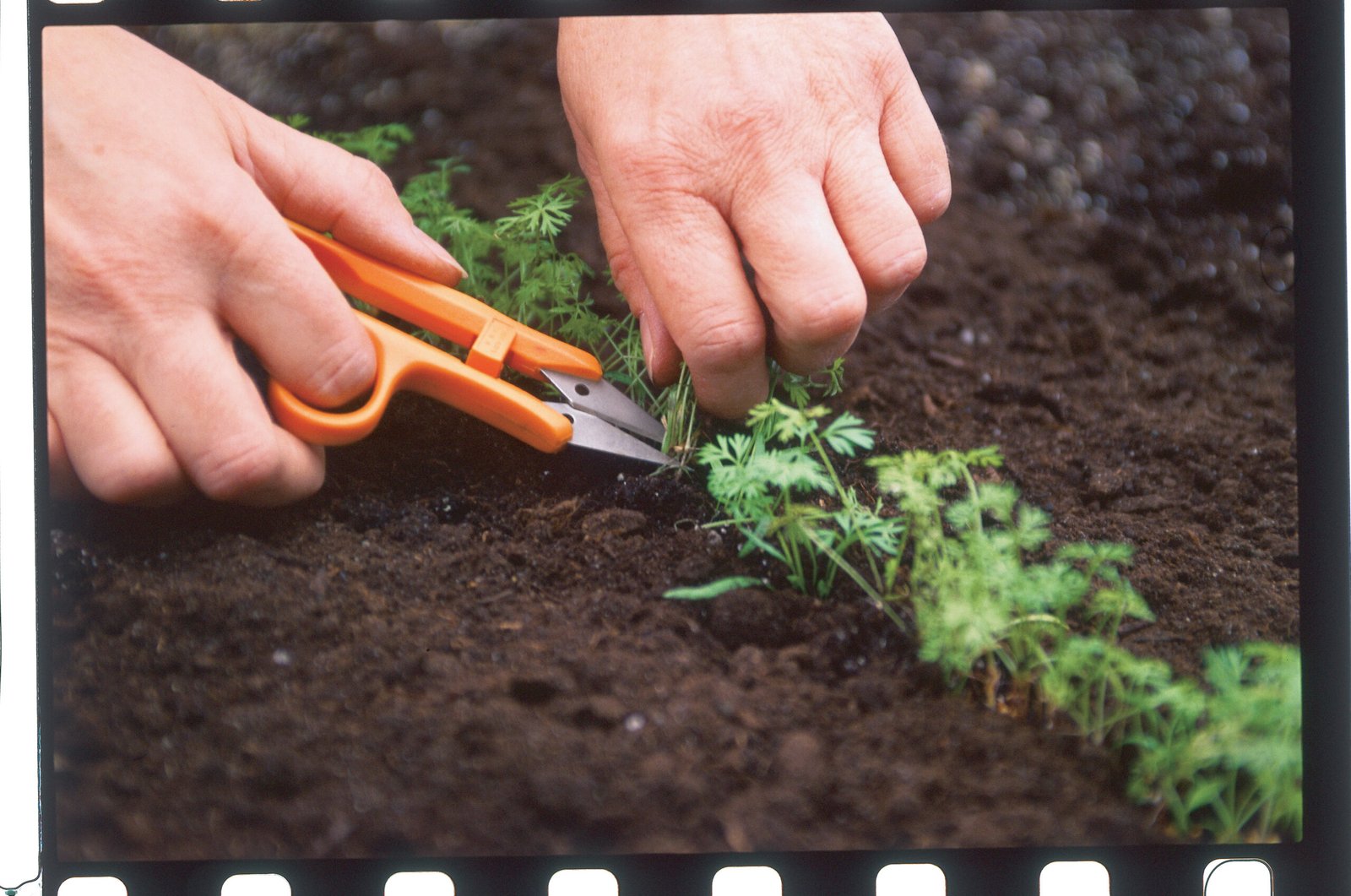
First thinning: when seedlings reach 5 centimeters tall, thin to 2 centimeters apart.
Second thinning: two weeks later, thin to 5 to 8 centimeters apart.
Use scissors instead of pulling to avoid disturbing nearby roots.
Spacing Carrots Correctly
| Carrot Type | Final Spacing | Row Spacing |
|---|---|---|
| Baby carrots | 2–3 cm | 20 cm |
| Standard carrots | 5–8 cm | 25–30 cm |
| Large storage carrots | 8–10 cm | 30 cm |
Watering Carrots
Carrots need consistent moisture, especially during root development.
Water deeply once or twice per week rather than lightly every day. Aim for 2.5 centimeters of water weekly including rainfall.
During hot weather, check soil more often.
Irregular watering causes roots to split. A dry period followed by heavy watering makes the inner root expand faster than the outer skin.
Mulching Carrots
After seedlings reach 8 to 10 centimeters tall, apply 3 to 5 centimeters of straw or shredded leaves between rows.
Mulch reduces evaporation, suppresses weeds, and keeps soil temperature stable.
Do not bury small seedlings under mulch.
Fertilizing Carrots
Carrots need moderate fertility but not excessive nitrogen.
Before planting, mix finished compost into the soil. If additional feeding is needed, use a fertilizer lower in nitrogen and higher in phosphorus and potassium.
Avoid lawn fertilizer or fresh manure.
Why Carrots Fork
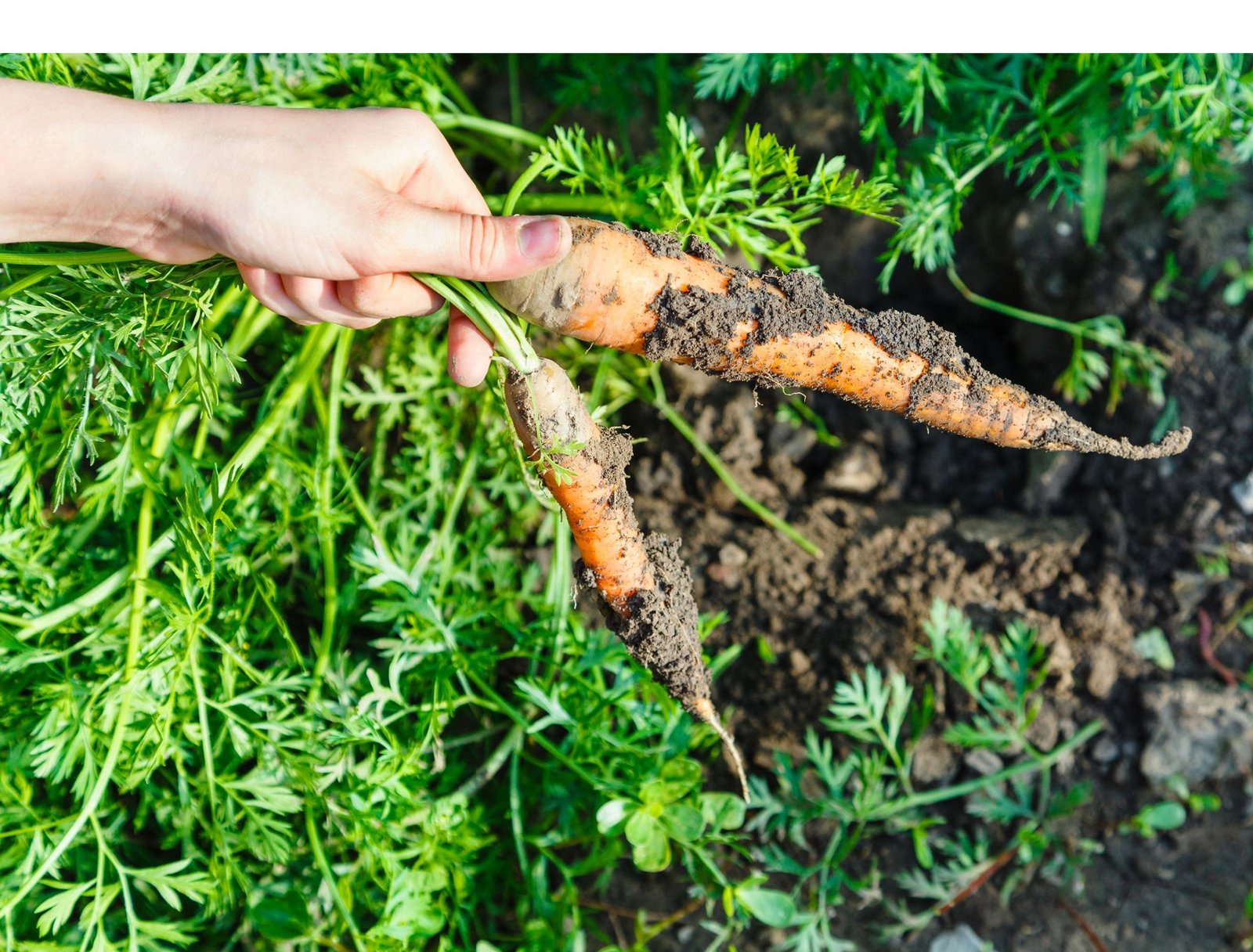
Forked carrots develop multiple roots instead of one straight taproot.
Common causes:
- Stones in soil
- Compacted layers
- Fresh manure
- Transplanting
- Root-knot nematodes
- Excess nitrogen
Prepare soil carefully before sowing.
Why Carrots Split
Split roots are caused by uneven watering.
When dry soil receives heavy rain, roots absorb water rapidly and crack.
Prevent splitting with consistent moisture and mulch.
Why Carrots Are Short and Stubby
Short roots usually indicate compacted soil, shallow containers, or a variety not suited to your conditions.
Loosen soil deeper or choose a shorter Chantenay type.
Green Carrot Shoulders
The top of a carrot turns green when exposed to sunlight. This area can become bitter.
Hill soil around exposed shoulders when roots begin showing above ground.
Green carrot tops are not toxic like green potatoes, but they taste unpleasant.
Common Carrot Pests
Carrot rust fly
Larvae tunnel through roots, leaving rusty tracks.
Use floating row cover immediately after planting and keep it sealed until harvest.
Wireworms
Thin brown larvae bore holes in roots. Rotate crops and avoid planting carrots after sod.
Aphids
Aphids cluster on foliage. Spray with water or use insecticidal soap.
Carrot Diseases
Alternaria leaf blight
Brown spots appear on leaves. Improve airflow and avoid overhead watering.
Powdery mildew
White patches develop on foliage late in the season. Remove heavily infected leaves.
Root rot
Soft dark roots develop in waterlogged soil. Improve drainage.
Growing Carrots in Containers
Carrots grow well in pots if the container is deep enough.
Choose:
- 20 cm deep for round varieties.
- 30 cm deep for Nantes carrots.
- 40 cm deep for long Imperator types.
Use loose potting mix blended with compost. Do not use heavy garden soil.
Containers dry faster than beds, so check moisture daily.
Real-World Example: Carrots in Heavy Clay Soil
A gardener has dense clay soil and fails twice with long Imperator carrots. The roots are short and forked.
Instead of trying to replace all the soil, the gardener builds a 30-centimeter-deep raised bed filled with sandy loam and compost. They choose Nantes and Chantenay varieties.
Seeds are sown in March, thinned twice, and watered deeply once per week.
After 70 days, the Nantes carrots are straight and 18 centimeters long. The Chantenay carrots are shorter but thick and sweet.
How to Harvest Carrots
Carrots are ready when shoulders reach the expected diameter for the variety.
Most mature in 60 to 80 days.
To harvest:
- Water dry soil the day before.
- Loosen soil beside the root with a fork.
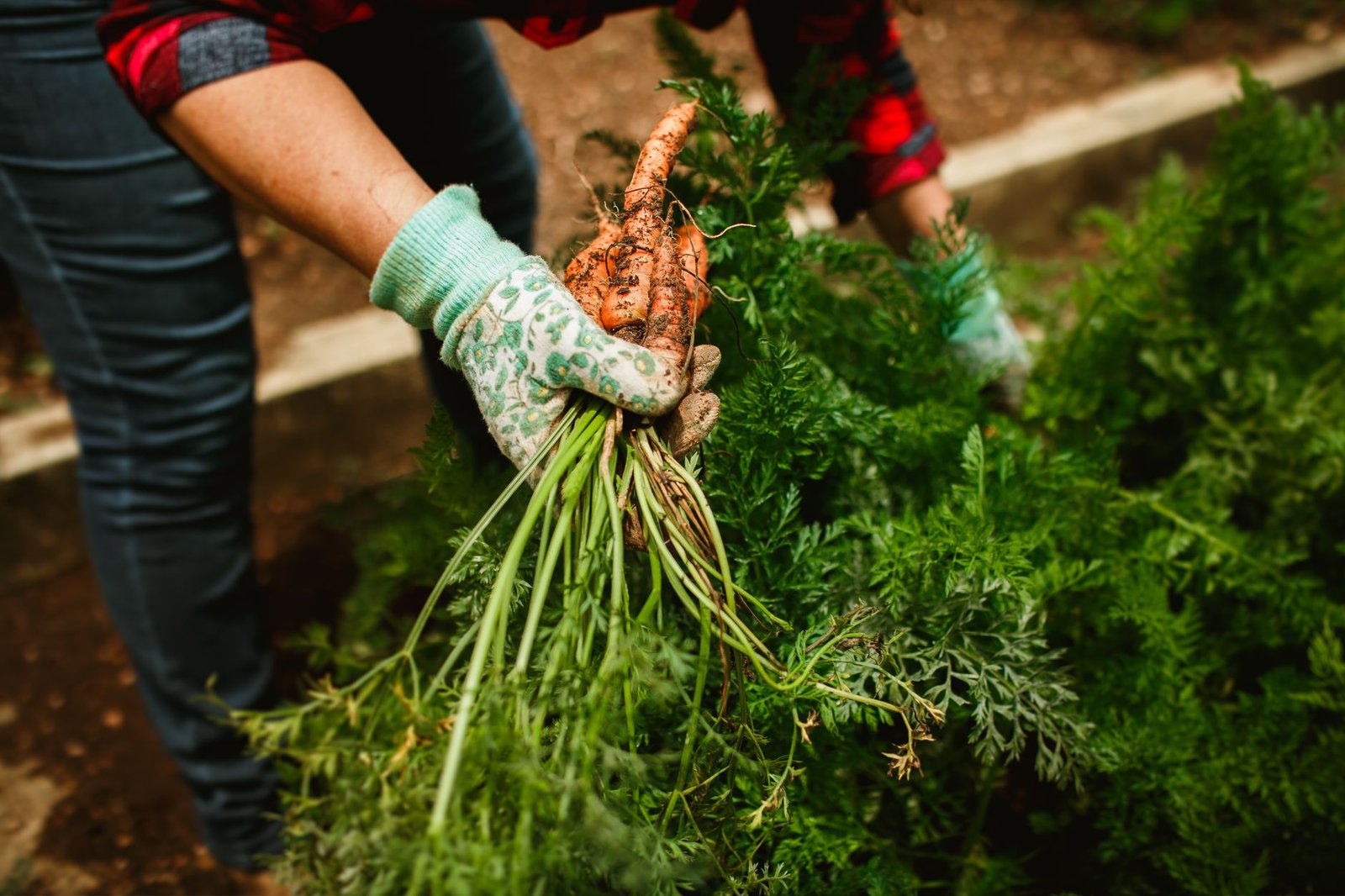
- Pull gently from the base of the leaves.
- Brush off excess soil.
- Cut tops to 1 centimeter.
Do not wash carrots until ready to use if storing long term.
When Do Carrots Taste Sweetest?
Cool weather converts starches into sugars. Carrots harvested after light frost often taste sweeter.
In cold climates, leave fall carrots in the ground after frost and cover with 15 centimeters of straw for insulation.
Harvest before the ground freezes solid.
Storing Carrots
Fresh carrots keep for several weeks in the refrigerator.
For long-term storage, place unwashed carrots in damp sand or sawdust at 0–4°C (32–40°F).
Remove tops before storage because leaves pull moisture from roots.
Common Carrot-Growing Mistakes
Planting in rocky soil
Stones cause forked roots.
Letting seeds dry before germination
Carrot seeds take up to three weeks to sprout.
Skipping thinning
Crowded roots stay small.
Using fresh manure
Excess nitrogen causes forked roots.
Watering irregularly
Dry-wet cycles cause splitting.
Carrot Growing Checklist
- Choose a variety suited to your soil.
- Loosen soil 25–30 cm deep.
- Remove stones.
- Sow seeds 6 mm deep.
- Keep surface moist for 10–21 days.
- Thin to 5–8 cm apart.
- Water consistently.
- Mulch after seedlings reach 10 cm.
- Avoid high-nitrogen fertilizer.
- Harvest at 60–80 days.
Frequently Asked Questions
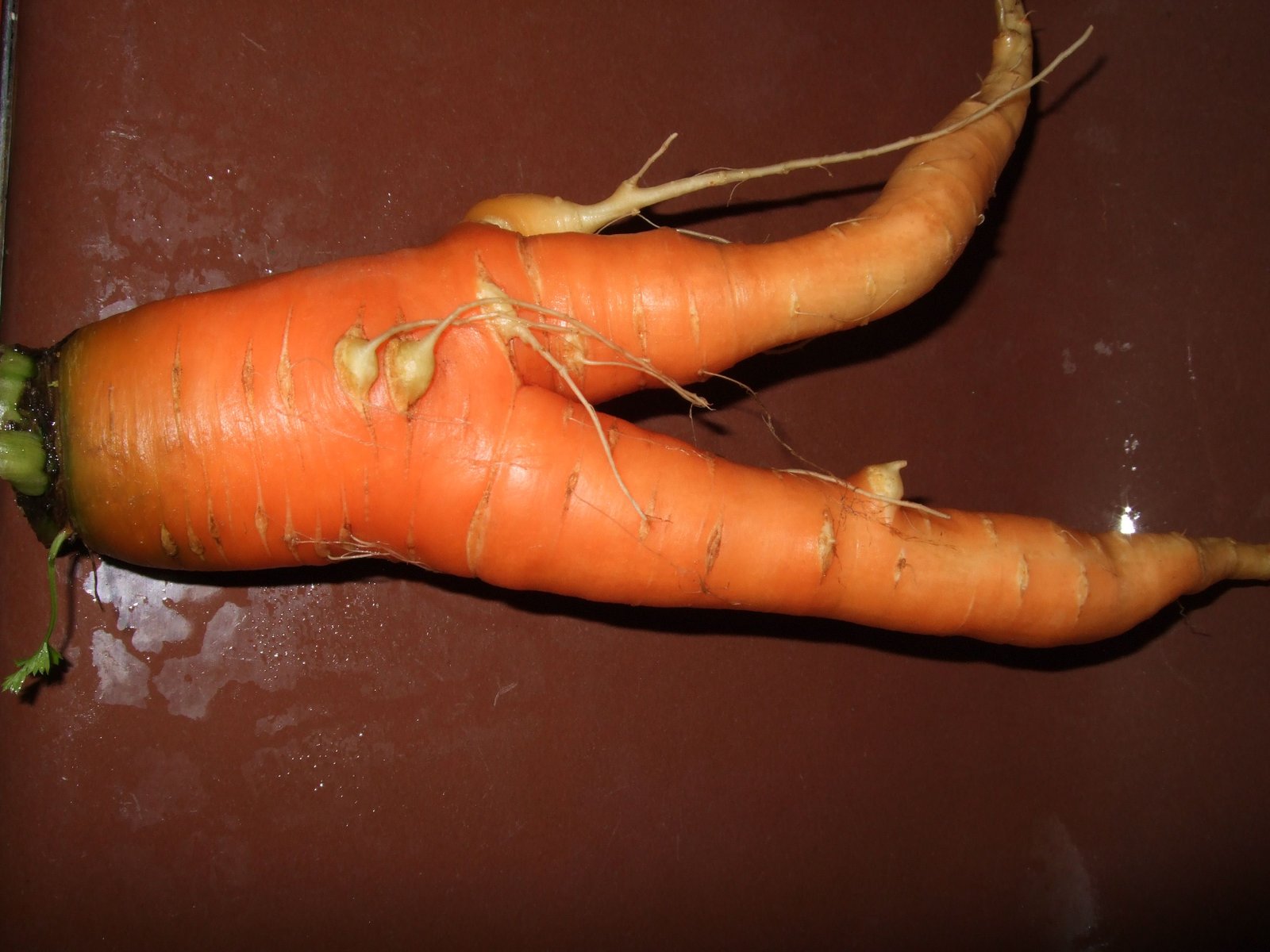
Why are my carrots hairy?
Excess nitrogen, fresh manure, or drought stress causes small side roots to develop.
Can I transplant carrot seedlings?
No. Transplanting damages the taproot and causes forking. Direct sow carrots where they will grow.
How long do carrots take to germinate?
Usually 10 to 21 days, depending on soil temperature.
Can carrots grow in shade?
They tolerate partial shade but need at least four to six hours of sun for good root development.
Do carrots need fertilizer?
In compost-rich soil, little fertilizer is needed. Avoid high-nitrogen products.
How many carrots can I grow per square foot?
About 16 carrots fit in one square foot when spaced 7 to 8 centimeters apart.
Test the Bed Before You Sow a Whole Row
If you have struggled with carrots before, perform a simple physical test. Push a garden fork or soil probe down to the expected root depth in several spots. If you hit a hard layer at 10 or 15 centimeters, long carrots will probably stop or fork there. Loosen that layer before sowing or switch to a shorter variety.
In a new raised bed, water thoroughly and watch whether the mix sinks dramatically. Top it up and let it settle before sowing. Carrot seed planted into a fluffy, recently filled bed can end up at uneven depths after the first heavy watering.
Thin in Two Passes Instead of One Aggressive Session
Carrot seedlings are delicate and easy to disturb. A two-stage thinning routine reduces competition without exposing large empty gaps. During the first pass, remove obvious clusters and leave seedlings roughly two centimeters apart. Once the survivors are stronger, make the final spacing decision based on the variety.
Use small scissors where roots are tangled. The tiny thinnings may be edible, but the main purpose is to protect the roots you intend to keep. Water gently after thinning if the soil surface has been disturbed.
Prevent Green Shoulders Before They Become Bitter
As carrots expand, the shoulder can rise above the soil. Do not wait until a wide green ring is visible. Pull a little loose soil or fine mulch around exposed shoulders during routine weeding. This blocks light while leaving the foliage uncovered.
In containers, settling potting mix is a common reason shoulders become exposed. Add a small amount of fresh mix around the plants instead of burying the leafy crown.
Diagnose Forked, Hairy, or Misshapen Roots
Use the root shape as evidence. A carrot that branches sharply around a stone points to a physical obstacle. Many fine side roots across the whole carrot can suggest excess nitrogen, root stress, or nematode damage. A split root usually points to a dry period followed by rapid water uptake.
If every carrot in one section has the same short shape, dig below the crop and inspect the soil profile. A compacted layer, buried construction debris, or dense clay may be more important than fertilizer. Correct the bed before the next sowing rather than trying to repair mature roots.
Use Staggered Harvests Instead of Pulling the Whole Crop
Carrots do not all reach perfect size on the same day. Pull one test root from the row. If it is small, wait a week. If it is mature, harvest the largest carrots first and leave smaller roots to continue growing.
For fall crops in suitable climates, the garden itself can act as short-term storage. Mulch deeply after cool weather arrives and harvest as needed, provided the soil does not freeze solid or become waterlogged. In very wet winters, lifting and storing carrots indoors may prevent rot.
Plan the Next Crop After Carrots
Once carrots are removed, rake the surface lightly and inspect the soil before planting again. Carrots usually leave little bulky residue, so the bed is easy to reuse. Follow them with a crop suited to the season, such as beans in warm weather or leafy greens in cool weather.
If carrot rust fly or a serious soil problem affected the crop, rotate to a different plant family and follow local pest guidance. Keeping a simple bed record helps you avoid repeating the same susceptible crop in one problem area.
Conclusion: Prepare the Soil Before You Sow
Straight carrots start with loose soil. Remove stones, avoid fresh manure, and choose a variety that matches your soil depth.
Keep tiny seeds moist during the long germination period, thin seedlings early, and water consistently to prevent splitting.
Once you solve soil preparation and moisture, carrots become one of the easiest root vegetables to grow from seed.