A few tiny insects on one houseplant can become a collection-wide problem if they are ignored. The good news is that most common indoor pests are manageable when you identify them early, isolate the affected plant, and repeat treatment long enough to interrupt the pest’s life cycle.
The hardest part is diagnosis. Small flying insects may be fungus gnats, whiteflies, or something harmless from outside. White cotton-like patches may be mealybugs, but mineral residue can look similar from a distance. Fine webbing may indicate spider mites, while silver streaks and black specks can point toward thrips.
This guide explains how to identify common houseplant pests, what damage each one causes, how to treat infestations with practical methods, and how to prevent pests from spreading through an indoor plant collection.
First Rule: Isolate the Plant Before You Diagnose
If you suspect pests, move the plant away from others if possible. Leave enough light for the plant to remain healthy, but create physical separation while you inspect it.
Check nearby plants too. Pests can move between touching leaves, travel on clothing or tools, and in some cases fly short distances.
Do not immediately spray every plant in the house. Identify the pest first so you can choose a treatment that actually works.
Build a Simple Inspection Routine
Once a week, look closely at several parts of each plant:
- New leaves and growing points
- Leaf undersides
- Joints where leaves meet stems
- Soil surface
- Pot rim and drainage holes
- Stems near the soil line
A phone flashlight and a small magnifying lens make early infestations much easier to spot.
Fungus Gnats
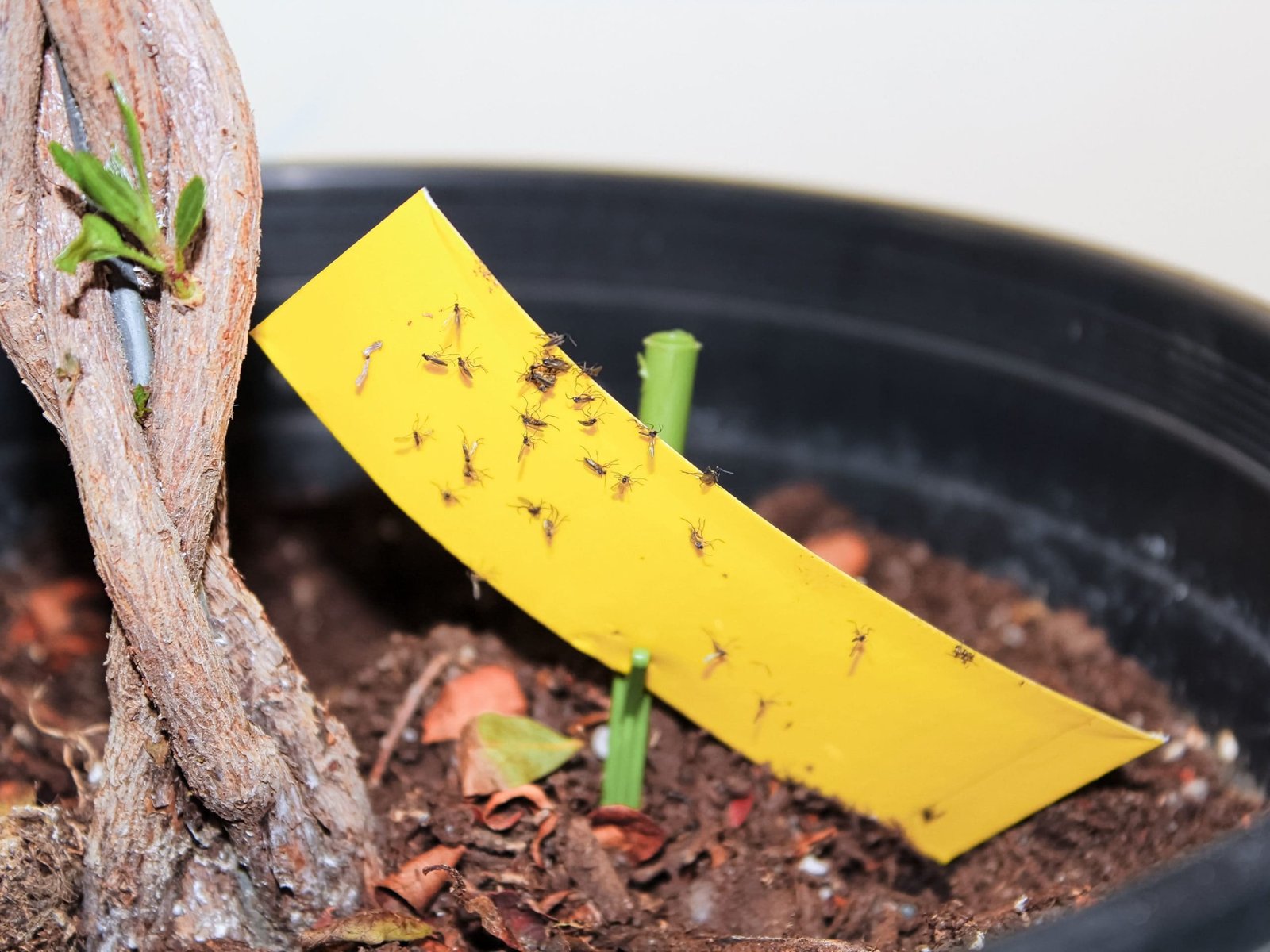
Fungus gnats are small dark flies that often appear around moist potting mix. Adults are annoying but usually cause little direct damage. Their larvae live in the upper mix and feed mainly on fungi and decaying organic matter, though heavy populations can damage fine roots of seedlings and young plants.
How to recognize fungus gnats
- Tiny dark flies run across or rise from the soil.
- They often gather near windows.
- They appear most often in consistently moist potting mix.
How to control fungus gnats
Let the upper potting mix dry more between waterings when the plant can tolerate it. Yellow sticky traps catch adults and help you monitor the population. Products containing Bacillus thuringiensis israelensis may be used for larvae where labeled for this purpose.
The key is moisture management. A constantly wet mix keeps the breeding environment active.
Spider Mites
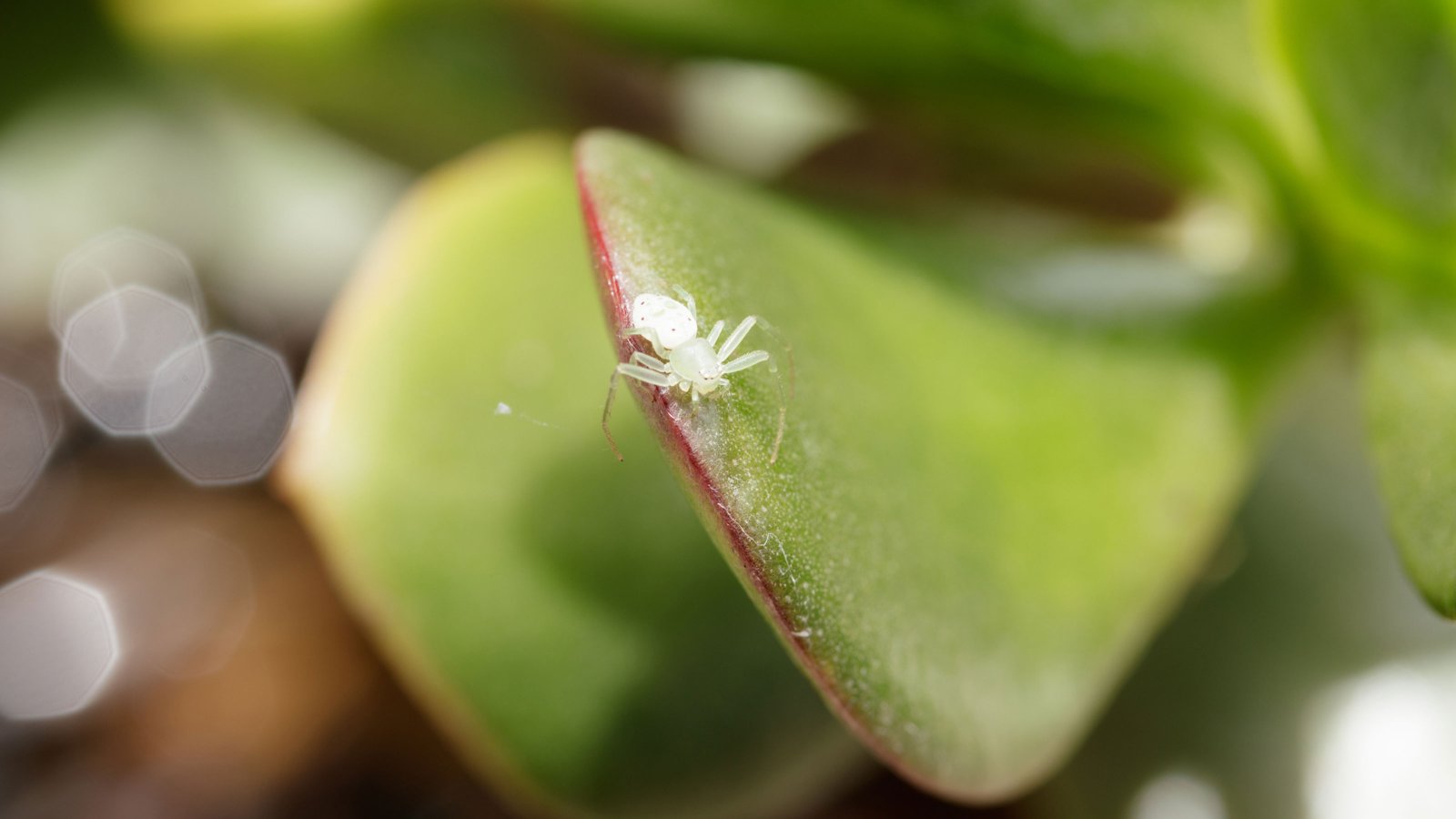
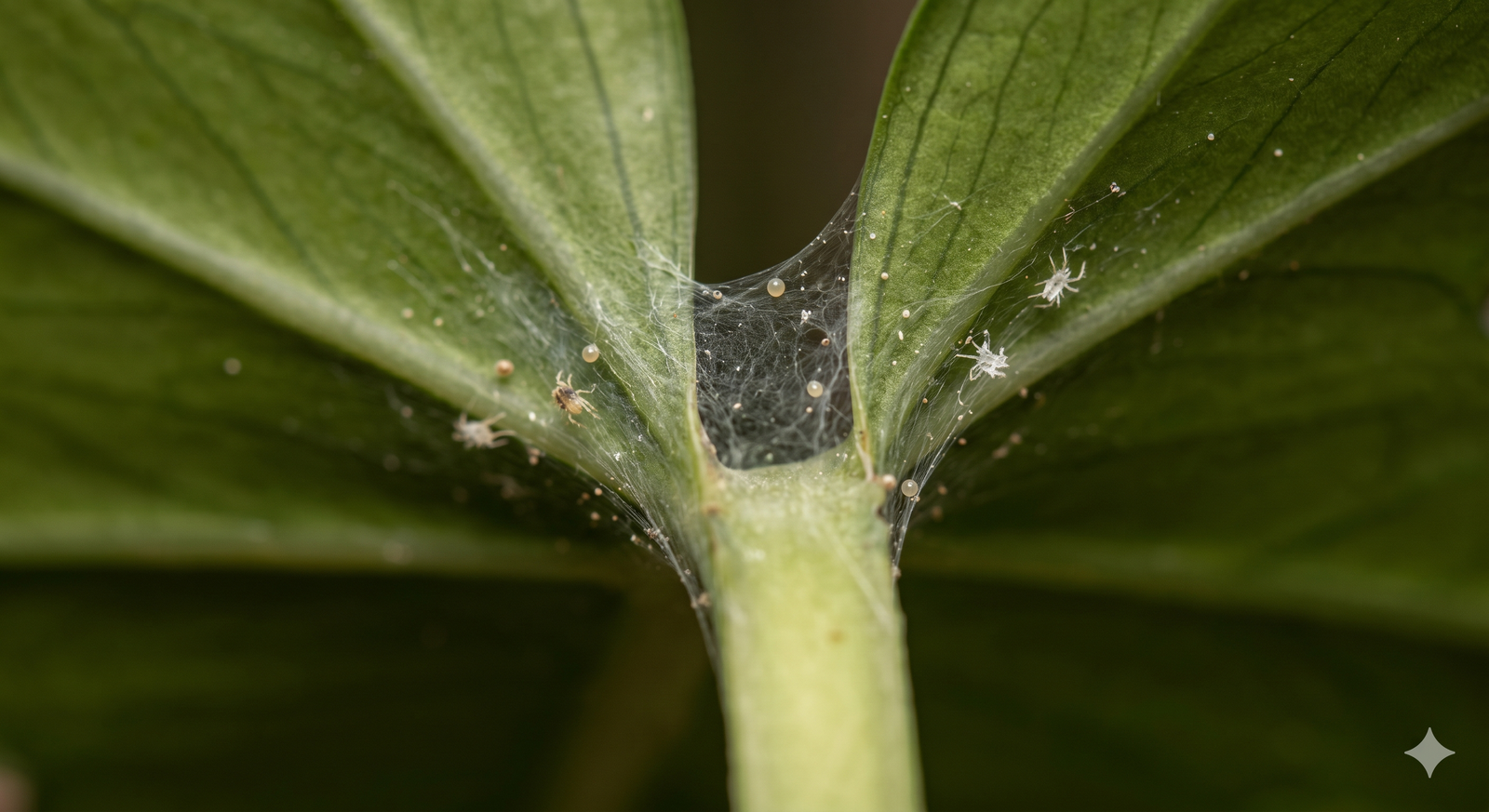
Spider mites are tiny relatives of spiders, not insects. They thrive in warm, dry indoor conditions and can multiply quickly.
Signs of spider mites
- Fine pale speckling on leaves
- Bronzed or dull foliage
- Very fine webbing between leaves or stems
- Tiny moving dots on leaf undersides
Hold a white sheet of paper under a leaf and tap it gently. Tiny mites may fall onto the paper and begin moving.
How to treat spider mites
Rinse the plant thoroughly, especially leaf undersides. Remove heavily damaged leaves if the plant can spare them. Insecticidal soap or horticultural oil labeled for mites can help when applied correctly and repeatedly.
Always test sprays on a small section first. Some houseplants are sensitive to oils or soaps.
Mealybugs
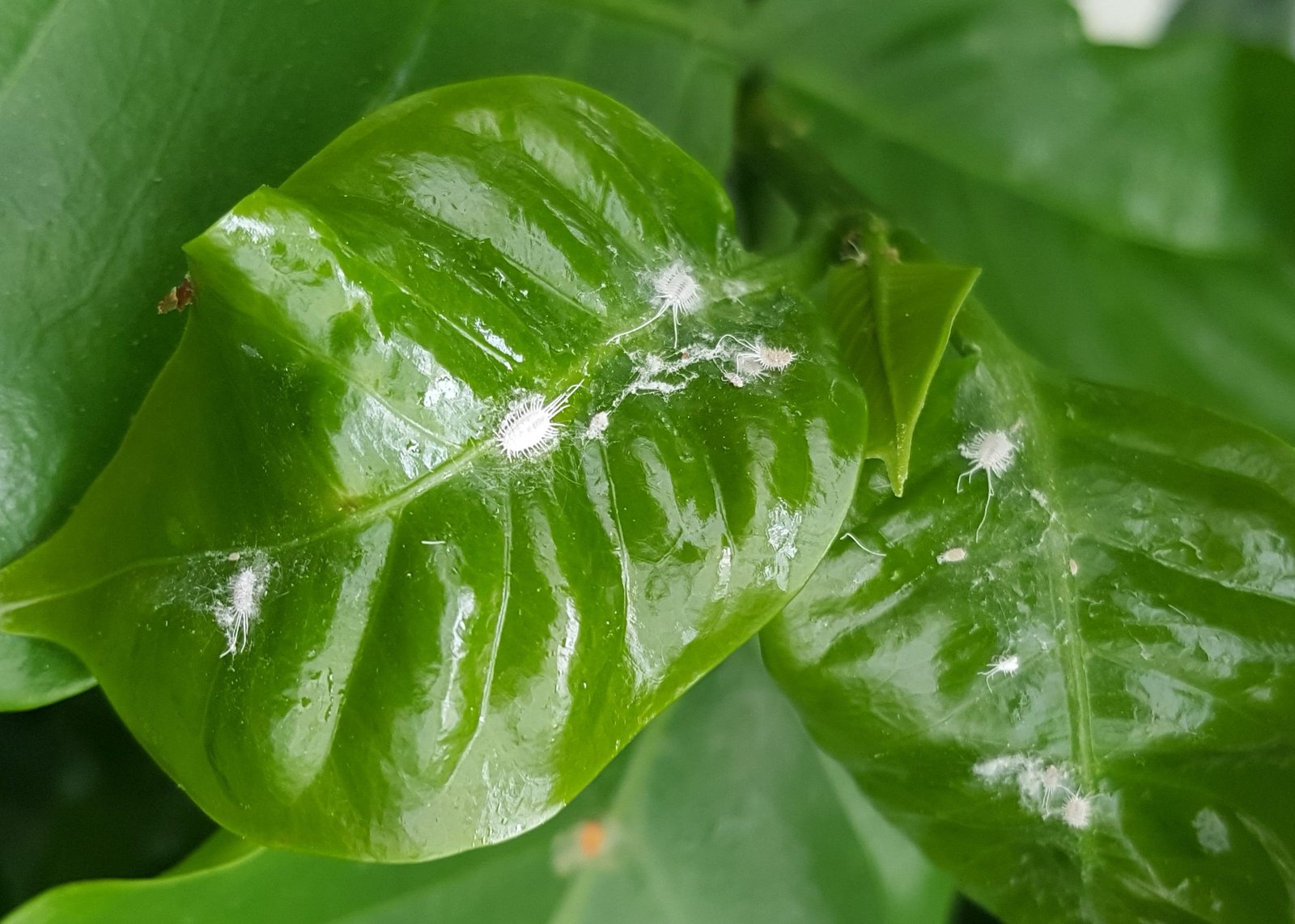
Mealybugs are soft-bodied sap-feeding insects covered with white wax. They often hide where leaves join stems, under sheaths, or around roots.
Signs of mealybugs
- White cotton-like clusters
- Sticky honeydew
- Black sooty mold growing on honeydew
- Distorted or weakened new growth
How to treat mealybugs
For a small infestation, remove visible insects with a cotton swab lightly moistened with 70% isopropyl alcohol, keeping the liquid away from sensitive plant tissue and testing first. Larger infestations may need insecticidal soap, horticultural oil, or another houseplant-safe product.
Repeat inspections because eggs and hidden insects can survive the first treatment.
Scale Insects
Scale insects look like small brown, tan, white, or gray bumps attached to stems and leaves. Mature scales may barely move.
How to tell scale from normal plant tissue
Try lifting one gently with a fingernail or blunt tool. If it comes away as a separate shell-like insect, it may be scale. Natural stem bumps and lenticels are part of the plant and do not scrape away in the same manner.
How to treat scale
Remove visible insects manually where practical. Horticultural oils can smother many scale stages when coverage is thorough. Severe infestations may require a labeled systemic or contact insecticide depending on local regulations and the plant.
Aphids
Aphids are soft, pear-shaped insects that gather on new growth and flower buds. They may be green, black, yellow, pink, or gray.
Signs of aphids
- Clusters on tender shoots
- Curled new leaves
- Sticky honeydew
- Ants attracted to honeydew on outdoor plants
Many indoor aphid infestations can be reduced with a strong water rinse followed by insecticidal soap if needed.
Thrips
Thrips are narrow insects that feed by scraping plant cells. They are difficult to see because adults and larvae are tiny and move quickly.
Common signs of thrips
- Silvery or bronze streaks
- Distorted new leaves
- Small black fecal specks
- Damaged flower petals
Blue or yellow sticky traps may help detect flying adults, but traps alone do not eliminate the infestation.
Remove badly damaged leaves, rinse the plant, and use a product labeled for thrips. Repeat treatment according to the label because several life stages may be present.
Whiteflies
Whiteflies are tiny white winged insects that rise from foliage when a plant is disturbed. They feed on sap and produce honeydew.
Check leaf undersides for immature stages. Sticky traps help monitor adults. Insecticidal soap or horticultural oil may help on suitable plants when repeated according to the product label.
Compare Common Houseplant Pests
| Pest | Where You See It | Typical Clue |
|---|---|---|
| Fungus gnat | Soil surface | Small dark flies |
| Spider mite | Leaf undersides | Fine webbing and stippling |
| Mealybug | Stem joints | White cottony patches |
| Scale | Stems and leaves | Fixed shell-like bumps |
| Aphid | New growth | Clusters of soft insects |
| Thrips | Leaves and flowers | Silver damage and black specks |
| Whitefly | Leaf undersides | White adults fly when disturbed |
Step-by-Step Houseplant Pest Treatment Plan
1. Isolate
Move the affected plant away from the collection.
2. Identify
Use a magnifier and inspect the exact damage pattern. Take clear photos if you need help from a nursery or extension service.
3. Remove the worst material
Prune severely damaged leaves or stems if the plant can tolerate it. Dispose of pest-heavy material in household waste rather than leaving it beside other plants.
4. Rinse
Many pests can be physically removed with a thorough shower or hose rinse. Support the soil so it does not wash out of the pot.
5. Treat
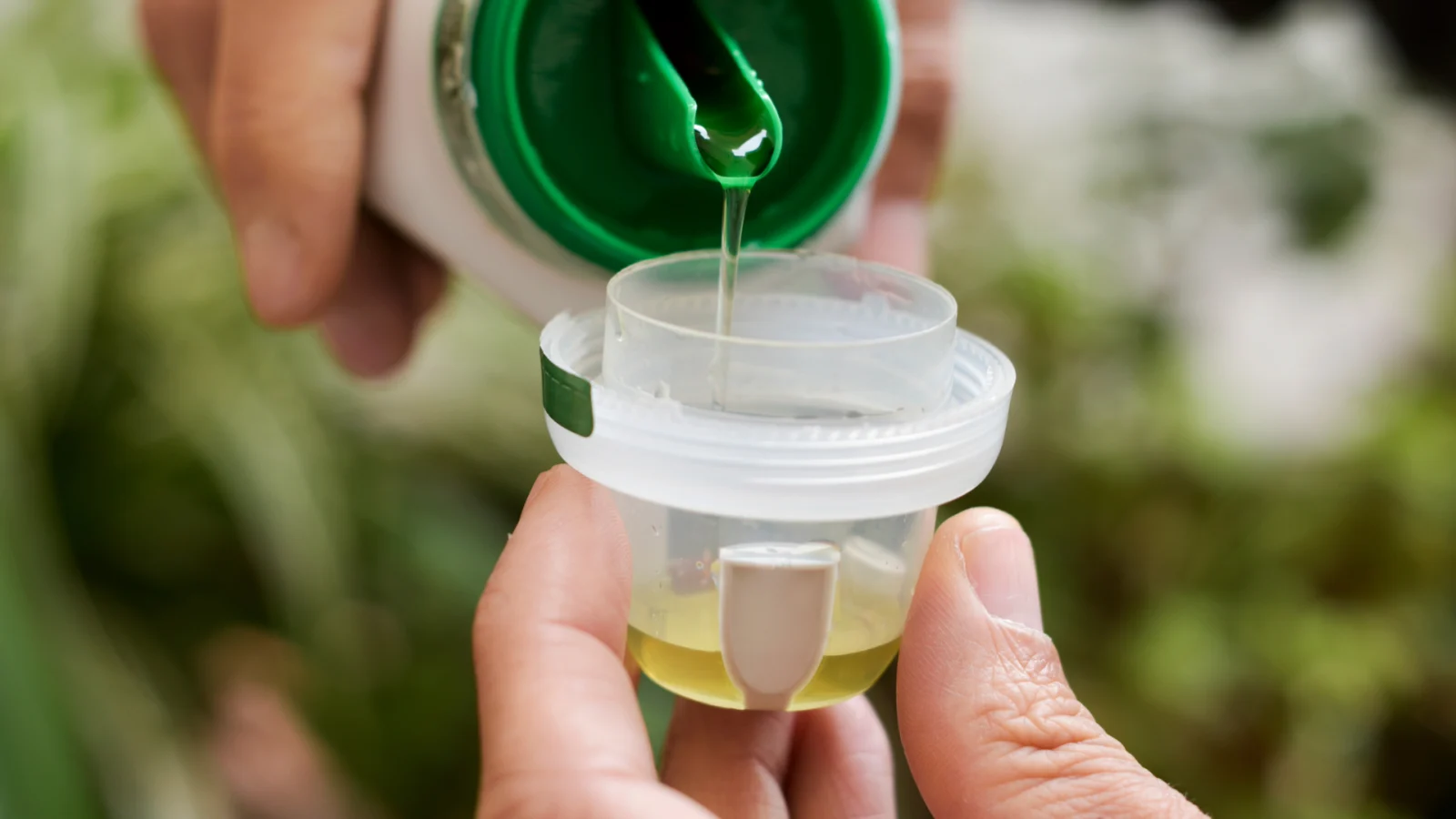
Use the least disruptive product that controls the identified pest. Follow the label for dilution, coverage, interval, and indoor use.
6. Repeat
One treatment rarely kills every egg or hidden stage. Continue checks for several weeks.
7. Inspect nearby plants
Do not wait for obvious damage. Catching a second infestation early is easier.
Using Insecticidal Soap Correctly
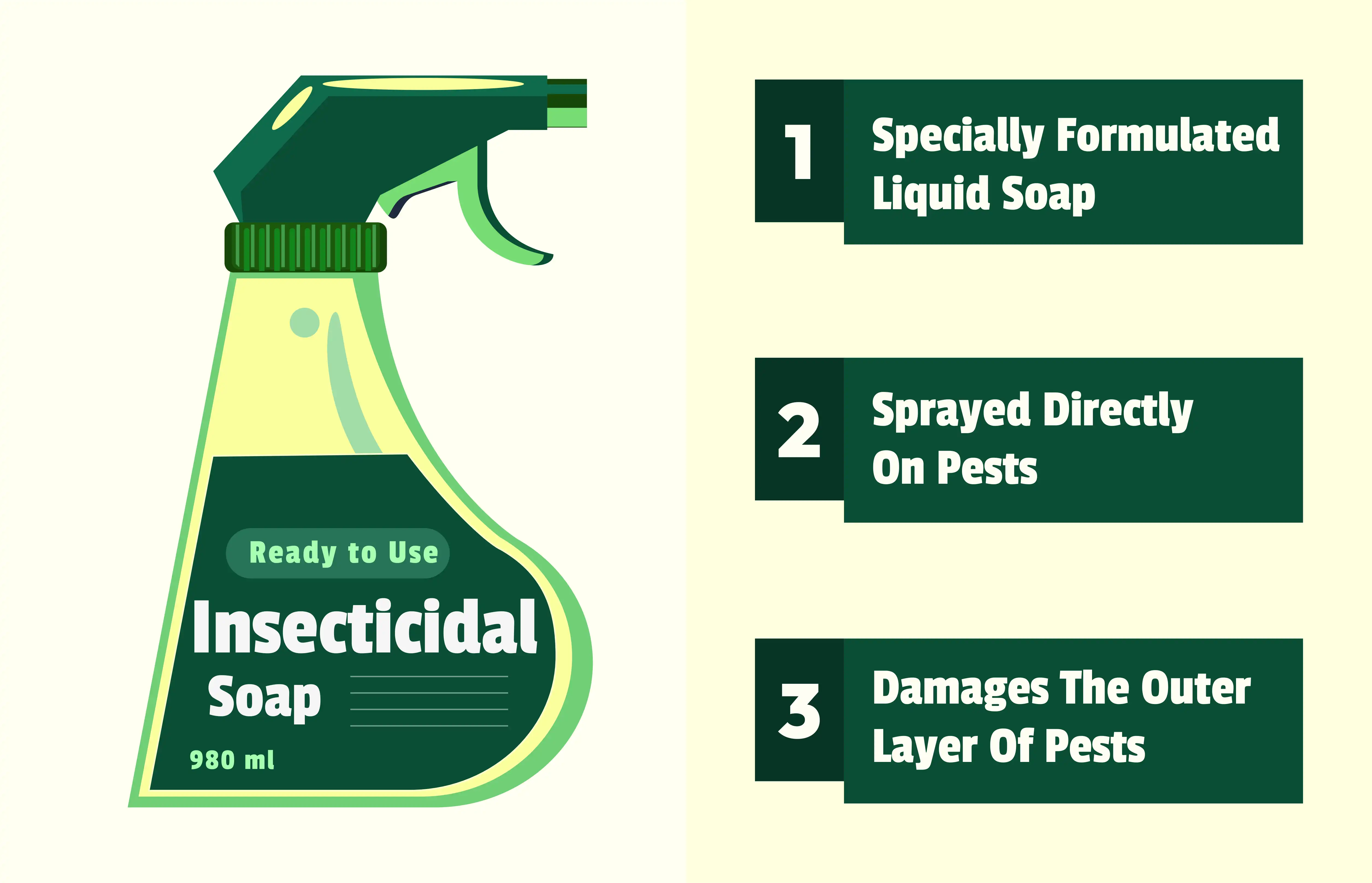
Insecticidal soap works by contacting soft-bodied pests. It does not provide long residual protection after drying.
Coverage matters. Spray leaf undersides, stems, and hiding places. Do not apply homemade dish-soap mixtures casually. Household detergents may contain degreasers, fragrances, and other ingredients that damage leaves.
Use a product labeled as insecticidal soap for plants.
Using Horticultural Oil
Horticultural oils can help with mites, scale, mealybugs, and other pests by coating and suffocating them.
Do not apply oil to heat-stressed plants or in strong direct sun. Some species are sensitive. Follow the label and test a small area first.
What About Neem Oil?
Neem-based products are commonly sold for plant pests, but formulations vary. Some contain clarified hydrophobic neem oil, while others contain the active compound azadirachtin.
Use only a product labeled for the pest and plant situation. More concentration does not mean better control.
Systemic Insecticides: When Extra Care Is Needed
Systemic products are absorbed by the plant and can control certain sap-feeding pests. They may also pose risks to pollinators if treated plants later flower outdoors.
Rules differ by country and product. Follow local regulations and the label. Avoid using a systemic simply because a contact treatment requires repetition.
Do Beneficial Insects Work Indoors?
Predatory mites, lacewing larvae, and other beneficial organisms are used in greenhouses and some home collections. They can be effective when matched to the pest and environmental conditions.
They are not a magic release-and-forget solution. Temperature, humidity, pesticide residues, and pest density affect results.
Why Pest Problems Often Begin After Buying a New Plant
Nurseries manage many plants close together, so pests can travel between them. A plant may look clean at purchase while eggs or small insects remain hidden.
Quarantine new plants for two to four weeks when practical. Keep them separate, inspect weekly, and avoid sharing watering trays.
Houseplant Quarantine Checklist
- Inspect leaf undersides at purchase.
- Check stem joints and soil surface.
- Keep the new plant separate.
- Use separate tools when possible.
- Recheck after one week.
- Look for sticky residue or new damage.
- Move it into the main collection only after repeated clean checks.
Real-World Example: Spider Mites on a Calathea
A calathea develops pale speckling and crispy leaf edges. The owner first assumes low humidity. When they inspect under the leaves with a flashlight, they notice fine webbing and tiny moving dots.
The plant is moved to a separate room. The owner rinses every leaf, removes two badly damaged leaves, and applies insecticidal soap labeled for mites. Seven days later, they repeat the rinse and treatment.
They also inspect nearby plants and find early mites on one pothos. Catching that second plant early prevents a larger outbreak.
Preventing Houseplant Pests
- Quarantine new plants.
- Give plants enough light so growth stays strong.
- Avoid chronically wet potting mix.
- Remove dead leaves from soil surfaces.
- Clean dusty foliage so pests are easier to see.
- Do not crowd plants so tightly that inspection is impossible.
- Inspect weekly.
- Clean tools after working on infested plants.
- Do not reuse contaminated potting mix.
Common Pest-Control Mistakes
Treating before identifying
Fungus gnats, mites, and thrips need different strategies.
Stopping after one spray
Eggs and hidden life stages often survive the first treatment.
Using stronger-than-label concentrations
This can burn leaves without improving control.
Ignoring neighboring plants
Pests rarely respect pot boundaries.
Using home remedies without testing
Vinegar, concentrated alcohol, dish detergent, essential oils, and other mixtures can damage plant tissue.
When to Discard a Plant
Sometimes one severely infested plant is not worth risking an entire collection. Consider disposal if:
- The plant is heavily infested throughout.
- Treatment has failed repeatedly.
- The plant is inexpensive and easily replaced.
- You have rare or valuable pest-free plants nearby.
Seal the plant in a bag before carrying it through the house so insects do not fall onto other plants.
Frequently Asked Questions
What are the tiny flies around my houseplant soil?
They are often fungus gnats, especially if the potting mix stays wet. Check sticky traps and inspect the soil before treating.
Does neem oil kill all houseplant pests?
No. Effectiveness depends on the pest, product formulation, coverage, and repeated use. Use the label as your guide.
Can I use rubbing alcohol on mealybugs?
A small amount on a cotton swab can remove individual mealybugs on tolerant plants. Test first and avoid soaking leaves.
How long should I quarantine a new plant?
Two to four weeks is practical for many collections because it gives hidden pests time to become visible.
Why do spider mites keep returning?
They reproduce quickly and eggs may survive treatment. Repeat treatment, inspect nearby plants, and improve monitoring.
Should I repot a plant with pests?
Only if the pest lives in the potting mix or the soil has another problem. Repotting adds stress and is unnecessary for many leaf pests.
Conclusion: Identify, Isolate, and Repeat
Successful houseplant pest control starts with diagnosis. Isolate the affected plant, inspect leaf undersides and growing points, and identify the pest before choosing a treatment.
Physical removal, rinsing, insecticidal soap, horticultural oil, sticky traps, and labeled pest products can all be useful when matched to the right problem. Repetition matters because one treatment rarely reaches every stage.
The most effective long-term defense is a weekly inspection habit. A five-minute check can catch a few mites or mealybugs before they become a collection-wide infestation.