
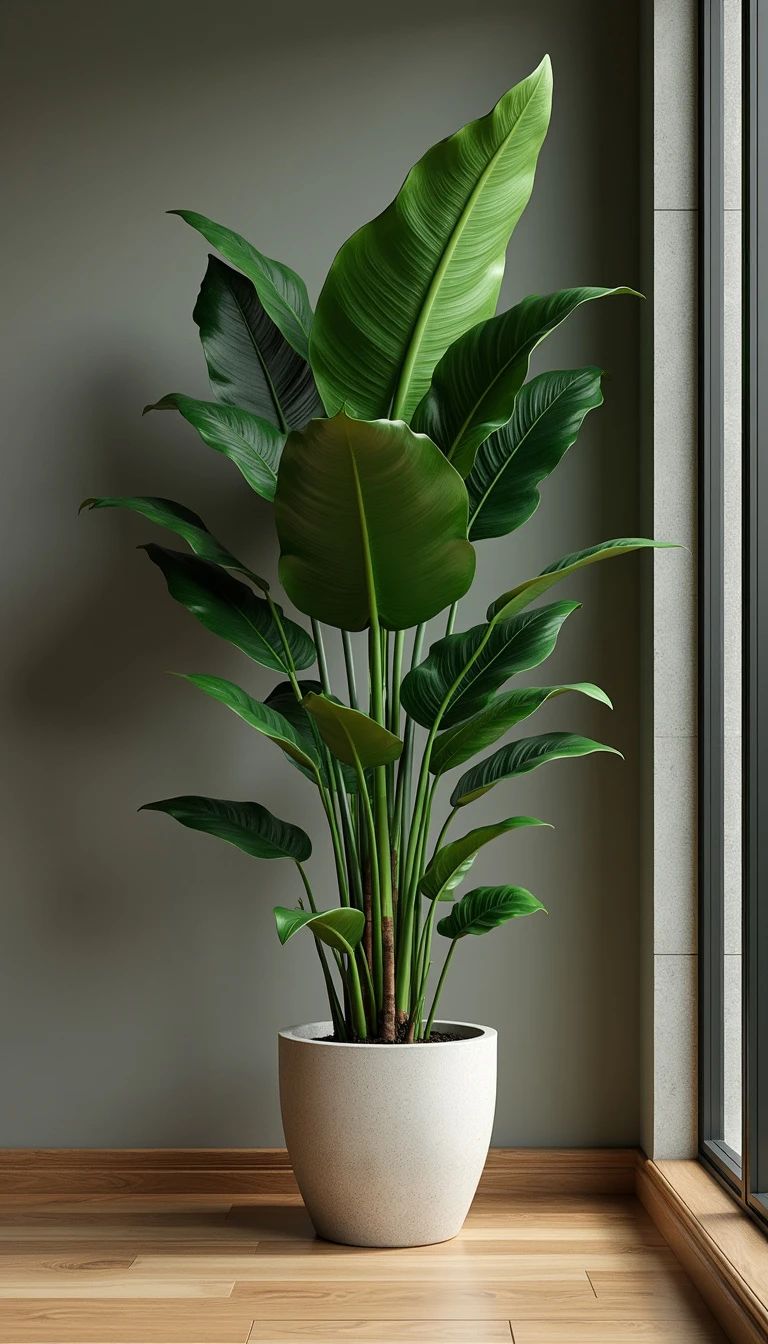

Discover the best air purifying plants for bedroom spaces in 2025 — backed by NASA research and sleep science. 12 proven plants that filter toxins, boost oxygen, and help you sleep better.
You spend roughly a third of your life in your bedroom. While you sleep, you breathe — slowly, deeply, continuously — for seven or eight hours straight. The quality of the air in that room matters more than in any other space in your home.
Here’s the uncomfortable reality: bedroom air is often more polluted than the air outside. Formaldehyde from furniture and mattresses. Benzene from synthetic fabrics and dry-cleaned clothes. Volatile organic compounds (VOCs) from paint, carpets, and cleaning products. These invisible chemicals accumulate in enclosed spaces — particularly in bedrooms where windows are often kept closed at night.
The best air purifying plants for bedroom environments offer a natural, beautiful solution. Backed by NASA’s landmark 1989 Clean Air Study and supported by more recent sleep science research, the right bedroom plants filter toxins from the air, release oxygen at night, add calming humidity, and have been shown to improve sleep quality measurably.
This guide covers the 12 best air purifying plants for bedroom spaces — what each one targets, how it benefits your sleep, and exactly how to care for it. Plus the honest truth about how many plants you actually need and where to place them.
Table of Contents
- Do bedroom plants actually purify air?
- Why bedrooms need air purifying plants most
- Snake Plant
- Peace Lily
- Spider Plant
- Golden Pothos
- Lavender
- Aloe Vera
- Boston Fern
- Chinese Evergreen
- ZZ Plant
- Areca Palm
- English Ivy
- Rubber Plant
- How many plants does a bedroom need?
- Best placement for bedroom air purifying plants
- Bedroom plant safety — pets and children
1. Do Bedroom Plants Actually Purify Air? {#do-they-work}
Let’s start with the honest answer — because most articles on the best air purifying plants for bedroom spaces either oversell or completely dismiss the evidence.
The science begins with NASA. In 1989, NASA researchers found that certain houseplants could remove up to 87% of toxic VOCs from sealed test chambers within 24 hours. This landmark study identified specific plants as genuinely effective air filters — and the best air purifying plants for bedroom use largely come from that original list.
However, real bedrooms are not sealed NASA chambers. A 2019 review noted that you would need a very large number of plants to match the air filtration of a mechanical air purifier in a normally ventilated room.
So what’s the realistic picture?
A 2024 meta-analysis published in the Journal of Environmental Psychology found that people who keep plants in the bedroom report significantly better sleep quality, reduced stress, and improved morning mood — regardless of measured air quality changes. The benefits appear to come from a combination of modest air purification, increased humidity, psychological calming effects, and in some cases direct aromatherapy from scented plants.
The conclusion: the best air purifying plants for bedroom environments genuinely improve your sleeping space — through multiple overlapping mechanisms, not air filtration alone. Three to five well-chosen plants in a bedroom do provide measurable improvements in humidity, oxygen levels, and VOC reduction.
One more remarkable finding: research showed that plants and their potting soil continuously exposed to pollutants improve their air-purifying capacity over time. The longer your bedroom plants are in place, the more effective they become.
2. Why Bedrooms Need Air Purifying Plants Most {#why-bedrooms}
Of all the rooms in your home, the bedroom is where air purifying plants have the greatest potential impact — for several important reasons.
You spend the most time there. Seven to nine hours of uninterrupted breathing in one enclosed space. No room benefits more from cleaner air.
Bedrooms are typically less ventilated. Windows closed at night, doors shut — bedroom air circulates less than living spaces. Pollutants accumulate.
Bedroom furnishings are significant pollutant sources. New mattresses, pillows, and synthetic bedding off-gas formaldehyde and other VOCs — often for months after purchase. The best air purifying plants for bedroom spaces directly target these compounds.
Dry bedroom air disrupts sleep. Central heating strips moisture from bedroom air, causing dry throats, irritated airways, and disrupted sleep. Several of the best air purifying plants for bedroom use also function as natural humidifiers — releasing moisture as they transpire.
Oxygen levels drop overnight in sealed rooms. Most plants photosynthesize during the day and consume oxygen at night. A select group — including the snake plant and aloe vera — use CAM photosynthesis to release oxygen specifically at night, making them uniquely valuable as the best air purifying plants for bedroom sleeping environments.
3. Snake Plant (Sansevieria / Dracaena Trifasciata) {#snake-plant}
Air purifying rating: ⭐⭐⭐⭐⭐ Exceptional Pollutants removed: Formaldehyde, benzene, trichloroethylene, xylene, nitrogen oxide Unique bedroom benefit: Releases oxygen at night via CAM photosynthesis Difficulty: Extremely easy Light: Low to bright indirect Water: Every 2–6 weeks
The snake plant is the undisputed number one among the best air purifying plants for bedroom spaces — and it holds this position for two reasons that no other plant can match simultaneously.
First, it targets more common bedroom pollutants than almost any other plant on the NASA list — formaldehyde from furniture, benzene from synthetic fabrics, trichloroethylene from dry-cleaned clothes. It is among the best air purifying plants for bedroom pollutant removal by a significant margin.
Second, and uniquely: the snake plant is one of the very few plants that releases oxygen at night rather than consuming it. Most plants photosynthesize during the day and switch to respiration at night — consuming oxygen as they rest. The snake plant uses CAM photosynthesis, absorbing CO2 and releasing oxygen continuously, including during your sleeping hours. This makes it the most logical choice as a bedside air purifying plant.
It is also one of the most indestructible houseplants in existence — tolerating low light, irregular watering, temperature fluctuations, and general neglect that would finish off most other plants.
Care guide:
- Water only when soil is completely dry — monthly in winter is often sufficient
- Never let it sit in water — root rot is the only real threat
- Tolerates very low light but grows faster in moderate indirect light
- Toxic to pets if ingested — place on a high shelf in pet households
4. Peace Lily (Spathiphyllum) {#peace-lily}
Air purifying rating: ⭐⭐⭐⭐⭐ Exceptional Pollutants removed: Formaldehyde, benzene, trichloroethylene, ammonia, xylene Unique bedroom benefit: Natural humidifier — adds moisture to dry bedroom air Difficulty: Easy Light: Low to moderate indirect Water: Every 1–2 weeks
Among the best air purifying plants for bedroom use, the peace lily stands out for the extraordinary breadth of pollutants it targets. It removes more types of common indoor chemicals than virtually any other single plant — making it one of the most valuable best air purifying plants for bedroom environments where multiple pollutant sources are present.
Its natural humidifying effect is particularly valuable in bedrooms with central heating — where dry air causes irritated throats, blocked sinuses, and disrupted sleep. The peace lily releases significant moisture as it transpires, raising bedroom humidity levels measurably over time.
It is also one of very few flowering plants that blooms in low light — producing elegant white flowers that make it as beautiful as it is functional. Its dramatic wilting when thirsty (recovering within hours of watering) makes it one of the most communicative plants you can own.
Care guide:
- Water when leaves just begin to droop slightly — it tells you when it’s thirsty
- Keep away from cold draughts — prefers temperatures above 15°C
- Mist occasionally to boost its natural humidifying effect
- Feed monthly in spring and summer with diluted liquid fertiliser
- Important: Toxic to cats and dogs — not suitable as a best air purifying plant for bedroom in pet households without careful placement
5. Spider Plant (Chlorophytum Comosum) {#spider-plant}
Air purifying rating: ⭐⭐⭐⭐ Excellent Pollutants removed: Formaldehyde, carbon monoxide, xylene Unique bedroom benefit: Completely non-toxic to pets and children Difficulty: Very easy Light: Bright to moderate indirect Water: Every 1–2 weeks
The spider plant is among the most effective and most family-safe of the best air purifying plants for bedroom environments. It removes formaldehyde — one of the most prevalent bedroom pollutants from new mattresses and furniture — alongside carbon monoxide and xylene with impressive efficiency.
What makes it uniquely valuable as one of the best air purifying plants for bedroom spaces in family homes is its complete safety record. Unlike most air purifying plants, the spider plant is entirely non-toxic to cats, dogs, and children — a critical consideration for a bedroom plant that will spend the night in close proximity to sleeping family members and pets.
It produces cascading “spiderettes” — baby plants on long trailing stems — that can be potted up to create new plants for free, and hangs beautifully from a high shelf or ceiling hook in a bedroom setting.
Care guide:
- Tolerates lower light than most but grows more vigorously in brighter conditions
- Brown leaf tips indicate fluoride in tap water — use filtered or rainwater
- Propagate spiderettes by pinning into compost while attached, then snipping once rooted
- Pet-safe ✓ Child-safe ✓ — the safest of all best air purifying plants for bedroom use
6. Golden Pothos (Epipremnum Aureum) {#golden-pothos}
Air purifying rating: ⭐⭐⭐⭐ Excellent Pollutants removed: Formaldehyde, benzene, carbon monoxide, xylene Unique bedroom benefit: Thrives in very low light — perfect for darker bedrooms Difficulty: Extremely easy Light: Low to bright indirect Water: Every 1–2 weeks
Golden pothos and spider plants were among the most effective plants in NASA testing for removing formaldehyde — making pothos one of the most proven best air purifying plants for bedroom use. It is exceptionally adaptable in low-light spaces and has shown strong capacity for formaldehyde and benzene absorption over sustained periods.
As one of the best air purifying plants for bedroom environments specifically, pothos excels for a practical reason most lists overlook: it genuinely thrives in the lower light conditions of most bedrooms. Many air purifying plants need bright indirect light to perform well — pothos works effectively even in rooms that receive limited natural light.
Its trailing vines cascade beautifully from a high shelf or bedside table, adding lush greenery to a bedroom without requiring bright windowsill placement.
Care guide:
- Allow soil to dry between waterings — overwatering is the primary risk
- Loses variegation (yellow markings) in very low light — brighter positions maintain colour
- Propagates effortlessly in water from stem cuttings
- Toxic to cats, dogs, and humans if ingested — keep out of reach in pet and child households
7. Lavender (Lavandula) {#lavender}
Air purifying rating: ⭐⭐⭐ Good (modest VOC removal) Unique bedroom benefit: Scientifically proven to improve sleep quality through aromatherapy Difficulty: Moderate (needs bright light) Light: Full sun — south-facing windowsill essential Water: Every 1–2 weeks — allow to dry between waterings
Lavender occupies a unique position among the best air purifying plants for bedroom spaces. Its direct air purification credentials are more modest than the snake plant or peace lily — but its sleep benefits are the most scientifically supported of any bedroom plant.
Multiple studies, including research published in the Journal of Alternative and Complementary Medicine, show lavender scent reduces heart rate and blood pressure, promotes relaxation, and improves sleep quality scores significantly. Lavender has the strongest scientific support for sleep improvement of all the best air purifying plants for bedroom environments.
The scent of lavender has been scientifically proven to reduce stress — making it one of the best bedroom plants if you need extra relaxation. It is also a natural pest repellent, deterring moths and insects from your bedroom.
The challenge: lavender needs genuine bright sunlight to thrive indoors — a south-facing bedroom windowsill is essential. It won’t perform as a best air purifying plant for bedroom spaces that lack direct sun.
Care guide:
- Full sun is non-negotiable — at least 6 hours of direct light daily
- Allow soil to dry completely between waterings — Mediterranean plant, hates wet roots
- Plant in very well-draining compost mixed with horticultural grit
- Pinch off flower heads as they fade to encourage continuous blooming
8. Aloe Vera {#aloe-vera}
Air purifying rating: ⭐⭐⭐⭐ Excellent Pollutants removed: Formaldehyde, benzene Unique bedroom benefit: Releases oxygen at night — enhances sleeping air Difficulty: Very easy Light: Bright direct to indirect Water: Every 2–4 weeks
Aloe vera shares one of the snake plant’s most valuable bedroom qualities — it releases oxygen at night through CAM photosynthesis, making it one of the best air purifying plants for bedroom sleeping environments specifically. While most plants consume oxygen overnight, aloe vera continues releasing it — gently enriching the air you breathe during sleep.
NASA ranked aloe vera among the best air purifying plants for bedroom and home use for its formaldehyde and benzene removal. As a bonus, the cooling gel inside its leaves provides natural relief for minor burns and skin irritation — making it one of the most practically useful of all the best air purifying plants for bedroom placement.
Care guide:
- Plant in well-draining cactus compost in a terracotta pot
- Water deeply but very infrequently — allow soil to dry completely
- Never let it sit in water — root rot develops rapidly
- Mildly toxic to cats and dogs if ingested
9. Boston Fern (Nephrolepis Exaltata) {#boston-fern}
Air purifying rating: ⭐⭐⭐⭐ Excellent Pollutants removed: Formaldehyde, xylene, toluene Unique bedroom benefit: Most effective natural humidifier of all bedroom plants Difficulty: Moderate — needs consistent moisture and humidity Light: Bright indirect Water: Keep consistently moist
The Boston fern is the most powerful natural humidifier among all the best air purifying plants for bedroom use. A large, established Boston fern can release several litres of moisture into bedroom air per day — dramatically improving humidity levels that central heating strips away overnight.
This makes it particularly valuable in winter bedrooms where dry air causes the cracked lips, dry throats, and blocked sinuses that fragment sleep. As one of the best air purifying plants for bedroom humidity management, the Boston fern addresses a sleep problem that pure air filtration cannot.
It targets formaldehyde particularly effectively — important in bedrooms with new mattresses, carpets, or pressed-wood furniture that off-gas this compound for months.
Care guide:
- Never allow soil to dry out — check every 2–3 days
- High humidity is essential: mist daily or place on a pebble tray with water
- Shed fronds are normal — remove fallen leaves regularly
- Pet-safe ✓ — non-toxic to cats and dogs
10. Chinese Evergreen (Aglaonema) {#chinese-evergreen}
Air purifying rating: ⭐⭐⭐⭐ Excellent Pollutants removed: Formaldehyde, benzene Unique bedroom benefit: Performs effectively in very low light conditions Difficulty: Extremely easy Light: Low to moderate indirect Water: Every 1–2 weeks
The Chinese evergreen is one of the most underrated of the best air purifying plants for bedroom spaces — beautiful, genuinely tough, and one of the few effective air purifying plants that performs well in the low-light conditions of many bedrooms.
It emits high oxygen content while purifying indoor spaces of harmful chemicals including benzene and formaldehyde — and does so consistently even in rooms that receive minimal natural light. This makes it one of the most practical best air purifying plants for bedroom use in north-facing rooms or bedrooms with small windows.
Its spectacular colour range — silver, green, pink, red, and multicoloured — makes it as decorative as it is functional.
Care guide:
- Avoid cold draughts and temperatures below 15°C
- Allow top inch of soil to dry between waterings
- Wipe leaves to maintain their glossy finish and purifying efficiency
- Toxic to pets — keep out of reach of cats and dogs
11. ZZ Plant (Zamioculcas Zamiifolia) {#zz-plant}
Air purifying rating: ⭐⭐⭐ Good Pollutants removed: Benzene, toluene, xylene, ethylbenzene Unique bedroom benefit: Most drought-tolerant of all best air purifying plants for bedroom use Difficulty: Extremely easy Light: Low to moderate indirect Water: Every 2–4 weeks
The ZZ plant is the ultimate low-maintenance entry among the best air purifying plants for bedroom environments. It is the most forgiving plant on this entire list — tolerating low light, irregular watering, temperature fluctuations, and general neglect that would finish off most other plants.
Its glossy, deep green leaves on elegant arching stems look genuinely sophisticated in a bedroom setting. The Raven ZZ variety — with near-black leaves — is particularly dramatic and has become one of the most sought-after of the best air purifying plants for bedroom modern interiors.
Care guide:
- Water even less than you think necessary — the rhizomes store water
- Caution: toxic if ingested and sap can irritate skin — wash hands after handling
- Grows slowly but steadily — don’t be alarmed by apparent inactivity
- Toxic to pets — keep well out of reach
12. Areca Palm (Dypsis Lutescens) {#areca-palm}
Air purifying rating: ⭐⭐⭐⭐ Excellent Pollutants removed: Formaldehyde, xylene, toluene Unique bedroom benefit: Most effective humidifier and the largest of the best air purifying plants for bedroom use — genuinely pet-safe Difficulty: Moderate Light: Bright indirect Water: Every 1–2 weeks
The areca palm is the statement plant among the best air purifying plants for bedroom environments — its graceful, feathery fronds reaching 1.5–2 metres create a genuinely tropical atmosphere while releasing several litres of moisture into bedroom air daily.
It is one of the few large best air purifying plants for bedroom use that is completely non-toxic to pets — a rare combination of impressive size, strong air purification, natural humidifying, and family safety that makes it uniquely valuable in the right bedroom.
Care guide:
- Needs genuinely bright indirect light — deteriorates in low light conditions
- Keep soil consistently moist but never waterlogged
- Sensitive to fluoride — use filtered water where possible
- Pet-safe ✓ Child-safe ✓ — one of the safest large best air purifying plants for bedroom use
13. English Ivy (Hedera Helix) {#english-ivy}
Air purifying rating: ⭐⭐⭐⭐ Excellent Pollutants removed: Formaldehyde, benzene, mould spores (uniquely effective) Unique bedroom benefit: Reduces airborne mould — highly beneficial for allergy sufferers Difficulty: Easy Light: Moderate to bright indirect Water: Every 1–2 weeks
English ivy earns its place among the best air purifying plants for bedroom spaces through a unique quality: it is one of the most effective plants for reducing airborne mould spores — a significant bedroom pollutant that most air purifying plant lists overlook entirely.
Studies have shown that English ivy can reduce airborne faecal particles and mould by up to 94% within 12 hours — making it one of the best air purifying plants for bedroom use specifically for allergy sufferers, asthma sufferers, and anyone in a naturally humid or older home where mould is a concern.
Its trailing or climbing growth is beautiful in a bedroom setting — cascading from a high shelf or trained along a bedhead.
Care guide:
- Keep soil consistently moist but not waterlogged
- Prefers cooler temperatures — ideal for bedrooms kept below 20°C at night
- Toxic to pets and humans if ingested — keep well out of reach
- Check regularly for spider mites — a common pest on indoor ivy
14. Rubber Plant (Ficus Elastica) {#rubber-plant}
Air purifying rating: ⭐⭐⭐⭐ Excellent Pollutants removed: Formaldehyde (particularly effective) Unique bedroom benefit: Large leaves maximise air purification surface area Difficulty: Easy Light: Bright indirect Water: Every 1–2 weeks
The rubber plant is one of the most striking of all the best air purifying plants for bedroom statement positions. Its large, glossy, dramatic leaves — in deep green, burgundy, or variegated cream and pink — make it a genuinely architectural presence that transforms a bedroom corner into something special.
Those large leaves are also what make it effective as one of the best air purifying plants for bedroom formaldehyde removal — more leaf surface area means more active air purification happening simultaneously.
Care guide:
- Wipe large leaves monthly with a damp cloth — dusty leaves purify less effectively
- The milky sap is a skin irritant — wear gloves when pruning
- Prefers a consistent position — moving it frequently causes leaf drop
- Toxic to pets — keep away from cats and dogs
15. How Many Plants Does a Bedroom Need? {#how-many}
NASA recommends one healthy plant in a 6 to 8-inch container for every 100 square feet of living space for effective air purification. For sleep and mood benefits, 2–6 plants in an average bedroom is the recommended range.
For a typical bedroom:
| Bedroom size | Plants for air quality | Plants for full benefit |
|---|---|---|
| Small (100 sq ft) | 1 plant | 2–3 plants |
| Medium (150 sq ft) | 1–2 plants | 3–4 plants |
| Large (200 sq ft) | 2 plants | 4–6 plants |
The key insight: more plants improve results, but placement and variety matter more than sheer quantity. Two well-chosen best air purifying plants for bedroom use — a snake plant by the bed for night-time oxygen and a peace lily in the corner for broad pollutant removal — outperform six random plants poorly placed.
16. Best Placement for Bedroom Air Purifying Plants {#placement}
Where you place the best air purifying plants for bedroom environments matters as much as which plants you choose:
Beside the bed: Snake plant or aloe vera — both release oxygen at night, directly enriching the air you breathe while sleeping. This is the most impactful single placement for the best air purifying plants for bedroom sleeping environments.
Near the window: Peace lily, rubber plant, areca palm — plants that need more light and provide broad pollutant coverage from the most well-lit position.
On a high shelf: Spider plant, pothos, English ivy — trailing plants that look beautiful elevated and purify the air across a wider area as their trailing stems spread.
In a dark corner: ZZ plant, Chinese evergreen, pothos — the low-light tolerant best air purifying plants for bedroom corners that would otherwise be unused growing space.
Near the door: Boston fern or areca palm — their natural humidifying effect benefits the whole room most when placed where air circulates.
17. Bedroom Plant Safety — Pets and Children {#safety}
Not all of the best air purifying plants for bedroom spaces are safe for pets and children. Before placing any plant in a bedroom shared with animals or young children, check its toxicity status:
Safe for pets and children ✓
- Spider plant
- Boston fern
- Areca palm
- Lavender
- Aloe vera (mildly toxic if ingested — safer than most)
Toxic — keep out of reach ✗
- Peace lily — toxic to cats and dogs
- Pothos — toxic to cats, dogs, and humans
- ZZ plant — toxic if ingested, sap irritates skin
- Chinese evergreen — toxic to pets
- English ivy — toxic to pets and humans
- Rubber plant — sap is an irritant
- Snake plant — mildly toxic to pets
In a bedroom where pets sleep on the bed or children play on the floor, stick to the spider plant, Boston fern, or areca palm as your primary best air purifying plants for bedroom use.
Final Thoughts
The best air purifying plants for bedroom environments are not a replacement for good ventilation — but they are genuinely beneficial additions to your sleeping space. They filter real pollutants, increase humidity, release oxygen, and have been shown repeatedly to improve sleep quality and morning wellbeing.
Start with one or two best air purifying plants for bedroom use — a snake plant beside the bed for night-time oxygen release, and a peace lily in the corner for broad pollutant filtration. Tend them well, keep their leaves clean, and let them do their quiet work through the night.
Your bedroom air — and your sleep — will be measurably better for it.
Happy growing and happy sleeping, Sajjad
Read these next: