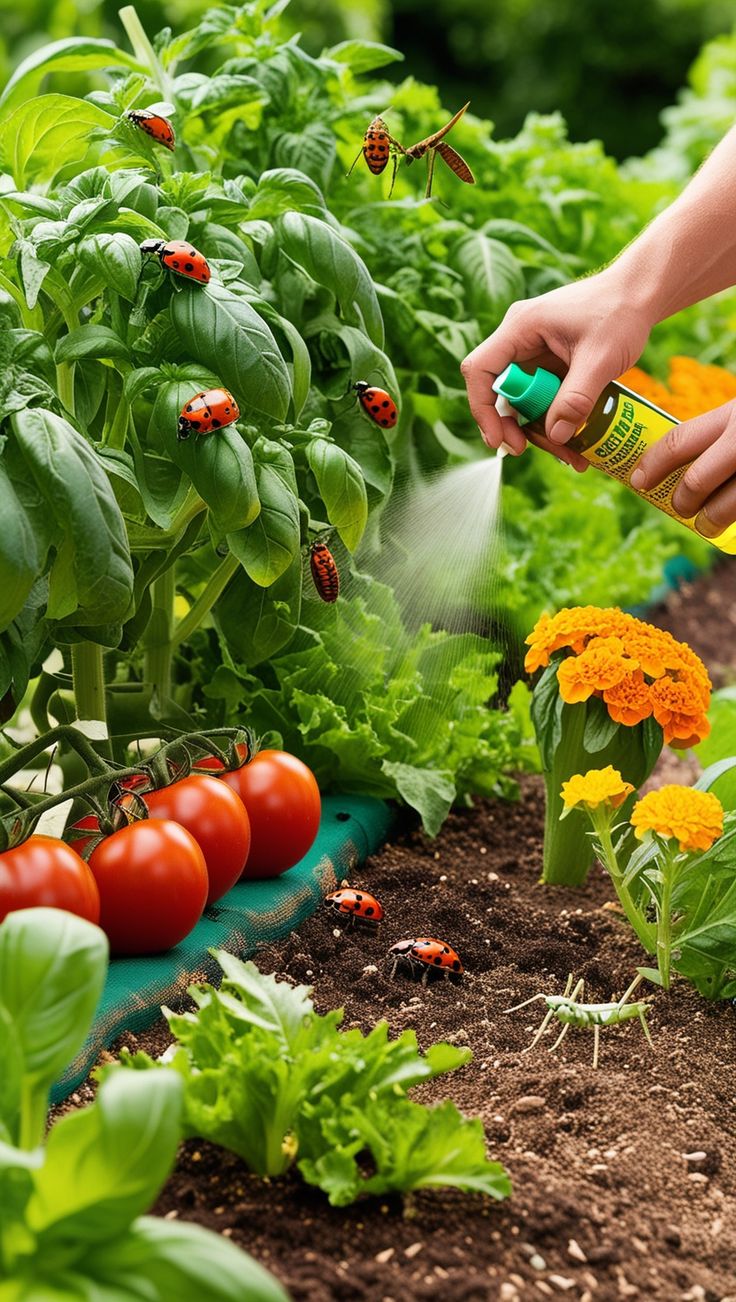

Discover the best organic pest control for vegetable garden growing in 2026 — from neem oil and companion planting to DIY sprays and beneficial insects. Protect your crops without harmful chemicals.
Every vegetable gardener faces the same moment eventually.
You walk out to check on your tomatoes and find the leaves riddled with tiny holes. Your brassicas are covered in grey-green aphids. The lettuce you’ve been nurturing for weeks has been demolished overnight by slugs. And your first instinct — reach for a chemical spray — conflicts with everything you set out to do when you decided to grow your own food.
Here’s the thing: you don’t need harsh chemicals to protect a productive vegetable garden. Organic pest control for vegetable garden growing is not only possible — it’s often more effective long-term than chemical approaches, because it works with nature rather than against it.
The key is to be proactive and not reactive. Organic pest controls are typically great at preventing an issue or an outbreak, but if you wait till you have a major issue, they are harder to deploy effectively. Building a system of organic pest control for vegetable garden growing before problems appear is the smartest strategy of all.
This complete guide covers every method of organic pest control for vegetable garden success — from physical barriers and companion planting to neem oil sprays, DIY recipes, and attracting the beneficial insects that do the pest control work for you.
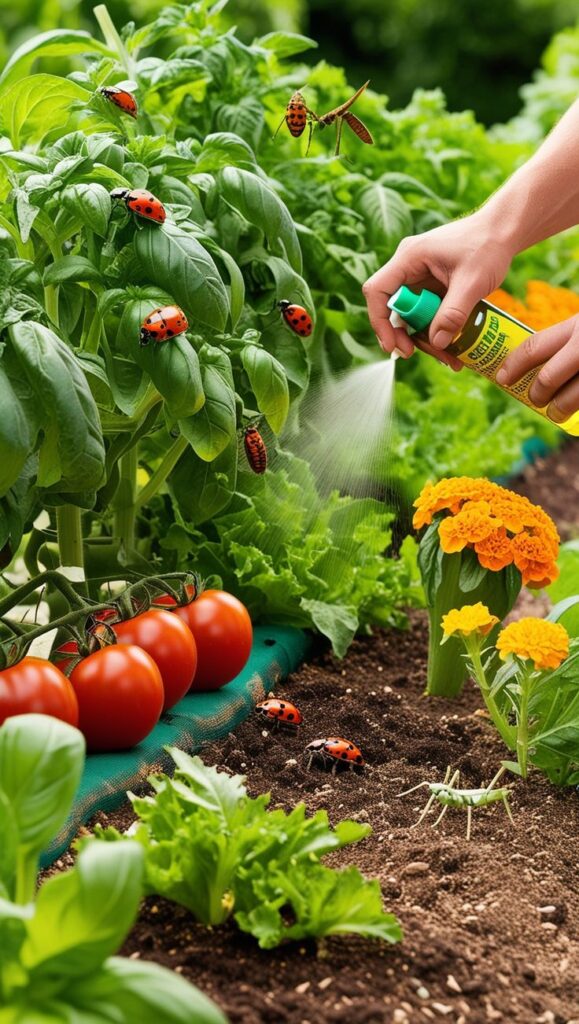
Table of Contents
- Why choose organic pest control for your vegetable garden?
- The organic pest control pyramid
- Prevention — the foundation of organic pest control
- Physical barriers — keeping pests out entirely
- Companion planting for organic pest control
- Encouraging beneficial insects
- Hand picking and physical removal
- Neem oil — the organic gardener’s best friend
- Diatomaceous earth
- DIY organic sprays you can make at home
- Organic pest control by pest type
- Crop rotation for long-term pest management
- Common mistakes in organic pest control
- Your organic pest control calendar
1. Why Choose Organic Pest Control for Your Vegetable Garden? {#why-organic}
Before diving into methods, it’s worth understanding why organic pest control for vegetable garden growing makes practical sense — not just ethical sense.
You’re growing food you’re going to eat
This is the most straightforward reason. Chemical pesticides leave residues on the food you’re growing. When you grow vegetables for your family’s table, the idea of coating them in synthetic chemicals is fundamentally at odds with the reason you’re growing them in the first place. Organic pest control for vegetable garden food production means what you harvest is genuinely clean, genuinely natural, and genuinely safe.
Chemical pesticides kill your allies
Your vegetable garden is full of organisms working in your favour — ladybirds eating aphids, ground beetles consuming slug eggs, parasitic wasps controlling caterpillar populations, bees pollinating your tomatoes and courgettes. Broad-spectrum chemical pesticides don’t distinguish between pest and ally. They kill everything, leaving your garden stripped of the natural defences that would otherwise help manage pest populations for free.
Pests develop resistance to chemicals
Repeated use of chemical pesticides creates selection pressure — the few pest individuals that survive each application are the most resistant ones, and they reproduce. Over time, pest populations evolve resistance to the chemicals being used against them. Organic pest control for vegetable garden management avoids this arms race entirely.
Organic methods build long-term resilience
A vegetable garden managed with organic pest control methods gradually becomes more resilient season by season. Healthy soil grows stronger plants. Companion planting attracts natural predators. Crop rotation breaks pest cycles. The garden becomes increasingly self-regulating — requiring less intervention over time, not more.
It’s better for the wider environment
Chemical pesticides don’t stay in your garden. They wash into soil and waterways, affect non-target species, and contribute to the documented decline of pollinating insects. Choosing organic pest control for vegetable garden growing is a choice that extends beyond your plot.
2. The Organic Pest Control Pyramid {#pyramid}
The most effective approach to organic pest control for vegetable garden growing follows a clear hierarchy — addressing pest problems at the most fundamental level first before reaching for any spray or intervention.
Level 1 — Prevention: Healthy soil, good plant spacing, crop rotation, resistant varieties. Prevents most pest problems before they start.
Level 2 — Physical barriers: Nets, fleece, copper tape, collars. Denies pests physical access to plants.
Level 3 — Companion planting: Strategic plant combinations that confuse, deter, or trap pests, and attract their natural predators.
Level 4 — Biological control: Encouraging or introducing beneficial insects, nematodes, and other natural predators that consume pest species.
Level 5 — Physical removal: Hand-picking, traps, water sprays. Direct removal of pest individuals.
Level 6 — Organic sprays: Neem oil, insecticidal soap, diatomaceous earth, DIY sprays. Used as a last resort when other methods haven’t controlled an outbreak.
Work through this pyramid from the bottom up. The most effective organic pest control for vegetable garden growing relies primarily on levels 1–4 — which require no spraying, no buying, and no ongoing cost.
3. Prevention — The Foundation of Organic Pest Control {#prevention}
The single most powerful form of organic pest control for vegetable garden growing is prevention — creating conditions where pests don’t thrive in the first place.
Grow healthy plants in healthy soil
Healthy plants in genuinely fertile soil are significantly more resistant to pest attack than stressed, nutrient-deficient ones. Pests are attracted to weak plants — plants that are struggling with poor soil, waterlogged roots, or nutrient deficiencies are far more vulnerable.
The best prevention: build your soil with compost, mulch consistently, water correctly, and give plants the right light. A thriving plant can tolerate some pest pressure without significant damage. A struggling plant cannot.
Choose resistant varieties
Many modern vegetable varieties have been bred for pest and disease resistance — and seed packets often note this explicitly. When choosing seeds for your vegetable garden, look for varieties described as resistant to the main pests and diseases in your area. Blight-resistant tomatoes, clubroot-resistant brassicas, and mildew-resistant courgettes exist for exactly this reason.
Space plants correctly
Crowded plants with poor air circulation are more susceptible to fungal diseases and create the humid, sheltered microclimates that many pests prefer. Follow spacing recommendations on seed packets. Thinning seedlings properly — even though it feels wasteful — is one of the most effective forms of organic pest control for vegetable garden growing.
Keep the garden tidy
Remove dead leaves, spent plants, and plant debris promptly. These provide shelter and overwintering sites for pest species — slugs hide under dead leaves, aphid eggs overwinter on plant debris, vine weevil larvae shelter in old compost. A tidy garden is a less hospitable garden for pests.
Only buy healthy plants
Be careful not to bring pests and diseases into the garden from nurseries or on your tools or clothes. Only choose pest-free plants, and disinfect your tools between uses — particularly between working with different crops.
4. Physical Barriers — Keeping Pests Out Entirely {#barriers}
Physical barriers are the most immediately effective form of organic pest control for vegetable garden growing. They don’t kill pests — they simply deny them access to your plants.
Fine mesh netting
Fine mesh netting (also called insect mesh or enviromesh) is arguably the single most effective organic pest control for vegetable garden brassicas, carrots, and leafy crops. Nothing protects your garden better than a simple physical barrier that lets water, sunlight, and air in, but keeps pests out.
Draped over hoops above brassicas, it excludes:
- Cabbage white butterflies (preventing caterpillar damage)
- Cabbage root fly
- Whitefly
- Aphids
- Flea beetles (which riddle rocket and radish leaves with tiny holes)
Apply immediately after planting and ensure edges are secured to the ground — a gap of even a few centimetres is enough for determined butterflies to squeeze through.
Carrot fly barrier
Carrot fly is a low-flying pest that navigates by smell — it cannot fly higher than approximately 60cm. A simple barrier of fine mesh or even fleece, 75cm tall, around your carrot bed provides highly effective organic pest control for vegetable garden carrot growing without any spray at all.
Copper tape for slugs and snails
Copper tape applied around the rim of raised beds or individual pots gives slugs and snails a mild electrical deterrent when they attempt to cross it. Effective as part of an organic pest control for vegetable garden slug management strategy — most effective when combined with other methods.
Fleece (row cover)
Horticultural fleece draped over crops provides protection from a wide range of pests while also offering frost protection in spring and autumn. Particularly useful for protecting seedlings — the most vulnerable stage — from aphids, flea beetles, and flying insects.
Brassica collars
Cardboard or carpet collars placed flat on the soil around the base of brassica stems deter cabbage root fly from laying eggs in the soil. A simple, free form of organic pest control for vegetable garden brassica growing that works extremely well.
5. Companion Planting for Organic Pest Control {#companion-planting}
Companion planting is one of the most fascinating and effective strategies for organic pest control for vegetable garden growing. It works through several mechanisms simultaneously — masking the scent of target crops, providing habitat for pest predators, and in some cases directly repelling pests.
How companion planting works
Planting a mix of plants is a chemical-free solution to keeping pests at bay and having an overall healthier, more balanced garden. Planting an entire bed with nothing but cabbages or tomatoes is one of the worst things you can do for pest prevention — a monoculture is the equivalent of a pest supermarket with no security.
The best companion planting combinations
Marigolds (Tagetes) with tomatoes and brassicas French marigolds are among the most widely used companion plants for organic pest control for vegetable garden growing. Their roots release compounds that deter soil nematodes, their strong scent confuses and repels aphids and whitefly, and their flowers attract hoverflies — whose larvae are voracious aphid predators. Plant them densely between and around your tomatoes and brassicas.
Nasturtiums as a trap crop Nasturtiums are brilliantly useful for organic pest control for vegetable garden aphid management. Aphids — particularly blackfly — are powerfully attracted to nasturtiums and will colonise them preferentially over your vegetables. This sacrificial planting draws aphids away from crops you care about, concentrating them where you can monitor and manage them. Let the nasturtiums get infested, then cut the affected growth and compost it.
Alliums with carrots and roses Alliums — garlic, chives, onions, and scallions — repel pests with their strong smell. Interplanted with carrots, they help mask the scent that attracts carrot fly. Planted near roses, they deter aphids. The strong smell of alliums genuinely confuses and deters a wide range of flying pests.
Basil with tomatoes Basil is said to improve tomato flavour when planted nearby, and its strong aromatic oils help deter thrips, aphids, and whitefly. A classic pairing for organic pest control for vegetable garden tomato growing.
Dill and fennel to attract predators Dill and fennel produce flat-topped flower heads (umbellifers) that are irresistible to beneficial insects — hoverflies, parasitic wasps, and lacewings. These beneficial insects feed on or parasitise common garden pests. Plant fennel and dill at the edges of your vegetable beds to attract these allies.
Calendula (pot marigold) Calendula attracts hoverflies and beneficial wasps, and also acts as a trap crop for aphids. Interplant liberally throughout your vegetable beds — it’s beautiful, edible (the petals are excellent in salads), and genuinely effective for organic pest control for vegetable garden growing.
6. Encouraging Beneficial Insects {#beneficial-insects}
Nature provides an extraordinary range of pest predators — insects and other creatures that actively hunt and consume the pests that damage your vegetables. Encouraging these allies is one of the most sustainable and effective approaches to organic pest control for vegetable garden growing.
The key beneficial insects and what they control
Ladybirds (ladybugs) — both adults and larvae consume enormous quantities of aphids. A single ladybird can eat up to 5,000 aphids in its lifetime. Attract them by providing overwintering habitat (bundles of hollow stems) and growing flowers that provide nectar and pollen.
Hoverflies — hoverfly larvae are among the most effective aphid predators in any garden. Adults are attracted to flat, open flowers — calendula, dill, fennel, and phacelia are particularly effective.
Ground beetles — nocturnal predators that patrol the soil surface consuming slug eggs, small slugs, and a range of soil-dwelling pests. Provide habitat by mulching and leaving some areas of undisturbed soil.
Parasitic wasps — tiny wasps that parasitise caterpillars, aphids, and whitefly. Invisible to the naked eye but enormously effective. Attracted by umbellifer flowers and undisturbed habitat.
Lacewings — larvae are aggressive predators of aphids, thrips, and small caterpillars. Adults are attracted to flowers and need sheltered overwintering sites.
How to attract beneficial insects
Grow plenty of flowers close to your vegetables to help draw in pollinators and pest predators. The best flowers for attracting beneficial insects for organic pest control for vegetable garden growing include:
- Calendula, borage, zinnias, cosmos, and nasturtiums
- Phacelia — one of the best single plants for attracting beneficial insects
- Sweet alyssum — particularly effective for attracting hoverflies
- Fennel and dill — essential for parasitic wasps
Several readers noted the ability of sweet alyssum and other flowers to attract hoverflies for organic aphid control. Avoid spraying anything during flowering — even organic sprays harm beneficial insects.
A note on timing sprays
Whatever you decide to use, avoid spraying during the day. Wait until after dusk, when pollinating insects and other beneficial bugs are less likely to be active. Spray on a still evening, so it doesn’t drift, and be as targeted as you can.
7. Hand Picking and Physical Removal {#hand-picking}
Unglamorous but surprisingly effective — hand picking is one of the most direct forms of organic pest control for vegetable garden growing, and for some pest species it is genuinely the best available method.
Caterpillars and cabbage white butterfly eggs
Check brassicas twice a week for the pale yellow eggs of cabbage white butterflies — laid in clusters on the undersides of leaves. Remove and crush them before they hatch. Pick off any caterpillars you find. Early morning or evening inspections are most productive. This simple habit, practiced consistently, can control cabbage white butterfly damage without any other intervention.
Slugs and snails
Go out after dark with a torch on damp evenings — this is when slugs and snails are most active. Collect them into a bucket of soapy water or relocate them well away from your garden. Relying on bigger predators — such as chickens, garter snakes, and ducks — is the most dependable long-term approach to organic pest control for vegetable garden slug management.
Beer traps (containers sunk level with the soil surface and filled with cheap beer) attract and drown slugs with an 80% success rate according to gardener surveys — one of the most widely endorsed organic pest control for vegetable garden slug methods.
Aphid colonies
Small aphid colonies can often be physically removed by pinching off heavily infested growing tips and dropping them in soapy water, or by blasting the colony with a jet of water from a hose. This disperses the colony without killing beneficial insects.
Vine weevil grubs
If you find vine weevil grubs (C-shaped creamy white grubs with brown heads) in the compost of container plants, remove and dispose of them. Check the roots of any plant that wilts unexpectedly without apparent cause.
8. Neem Oil — The Organic Gardener’s Best Friend {#neem-oil}
Neem oil is derived from the neem tree and is a natural insecticide that is effective against a wide range of pests. It works by disrupting the insect’s hormonal system, making it difficult for them to feed and reproduce.
Neem oil has become one of the most popular and reliable tools for organic pest control for vegetable garden growing — and for good reason. It targets insects at all life stages, also acts as a fungicide against powdery mildew and black spot, and breaks down quickly in the environment without leaving harmful residues.
What neem oil controls
- Aphids
- Whitefly
- Spider mites
- Thrips
- Mealybugs
- Powdery mildew and other fungal diseases
- A wide range of chewing and sucking insects
How to use neem oil
To use neem oil in your vegetable garden, mix 1–2 tablespoons of neem oil with one gallon (approximately 4.5 litres) of water. Add a few drops of dish soap as an emulsifier — neem oil doesn’t mix with water without it. Shake well and apply immediately.
Spray thoroughly onto both sides of leaves — the undersides are where most pest activity occurs. Once dry, the neem oil forms a short-term layer of protection against garden pests and some fungi. You may need to reapply it on a weekly or biweekly basis, depending on how bad your pest pressures are.
Important neem oil rules
- Always spray in the evening — neem oil can cause leaf burn in bright sunlight
- Never spray open flowers — neem oil can harm bees and other pollinators
- Reapply after rain — it washes off in wet weather
- Use cold-pressed neem oil for the most active ingredient content
9. Diatomaceous Earth {#diatomaceous-earth}
Diatomaceous earth (DE) is a naturally occurring powder made from the fossilised remains of tiny aquatic organisms called diatoms. It is one of the most effective physical pest controls for crawling insects and one of the safest for use in organic pest control for vegetable garden growing.
How it works
Diatomaceous earth works by physically damaging the waxy outer coating of insects that crawl through it — causing them to dehydrate and die. It is entirely mechanical in action, not chemical, and does not create resistance in pest populations.
What it controls
- Slugs and snails (apply around the base of plants)
- Vine weevils and other crawling beetles
- Ants
- Crawling aphid populations
How to apply
Dust diatomaceous earth around the base of plants and along rows. Reapply after rain — it loses effectiveness when wet. Use food-grade diatomaceous earth for vegetable garden applications.
Important caution
Wear a dust mask when applying — the fine particles can irritate lungs. Avoid applying to open flowers where bees are foraging — DE is non-selective and will harm beneficial insects that crawl through it.
10. DIY Organic Sprays You Can Make at Home {#diy-sprays}
Some of the most effective tools for organic pest control for vegetable garden growing cost almost nothing and can be made from kitchen ingredients. Here are the most proven DIY organic sprays:
Garlic spray — for aphids and general deterrence
Crush one medium clove of garlic and marinate it in one teaspoon of vegetable oil for at least 24 hours. Then add half a teaspoon of dish soap and mix well in one litre of water. Optionally add a teaspoon of cayenne pepper — this makes it more effective against most pests.
Spray on the plants and soil in the morning. The strong allicin compounds in garlic deter a wide range of pests and are particularly effective for organic pest control for vegetable garden aphid management.
Insecticidal soap spray — for soft-bodied insects
A very simple spray can be made at home by adding two teaspoons of dish soap to two pints (one litre) of water. Give it a good shake then use this as a contact spray where infestations are very concentrated.
Liquid soap isn’t great for the garden in large quantities — use it in limited amounts as a targeted treatment rather than a routine spray. Apply directly to aphid colonies, whitefly, and spider mites — the soap disrupts their cell membranes on contact.
Chilli spray — for aphids and larger pests
Blend several hot chillies with water, strain, and dilute to a light pink colour. Spray onto affected plants. Capsaicin — the compound that makes chillies hot — deters aphids, caterpillars, and even some larger pests like rabbits and deer. Reapply after rain.
Bicarbonate of soda spray — for fungal diseases
Mix one teaspoon of bicarbonate of soda with one litre of water and a few drops of dish soap. Spray on leaves affected by powdery mildew. The alkaline solution disrupts the fungal growth. Not a cure for established mildew but effective as a preventive spray.
11. Organic Pest Control by Pest Type {#by-pest}
Aphids
Prevention: Companion plant with marigolds, nasturtiums, and alliums. Encourage ladybirds and hoverflies. Physical: Blast with water jet. Pinch off heavily infested growing tips. Sprays: Garlic spray, insecticidal soap, neem oil. Notes: Some aphid presence is normal and beneficial — it feeds the predators that keep populations balanced. Only intervene when numbers are damaging plant health.
Slugs and snails
Prevention: Avoid overwatering. Clear debris and mulch away from plant bases at night. Physical: Night-time picking. Beer traps. Copper tape around raised beds. Barriers: Diatomaceous earth around plant bases. Crushed eggshells. Biological: Parasitic nematodes (Phasmarhabditis hermaphrodita) watered into soil — extremely effective organic pest control for vegetable garden slug management. Natural predators: Encourage hedgehogs, frogs, toads, ground beetles, and birds.
Caterpillars and cabbage white butterflies
Prevention: Fine mesh netting over all brassicas — the most effective single method. Physical: Regular inspection and hand-picking of eggs and caterpillars. Biological: Bacillus thuringiensis (Bt) — a naturally occurring soil bacteria that is toxic to caterpillars but harmless to other insects, mammals, and birds. Available as an organic spray.
Whitefly
Prevention: Companion plant with marigolds and basil near tomatoes. Physical: Yellow sticky traps catch large numbers of adult whitefly. Sprays: Neem oil applied to undersides of leaves. Insecticidal soap. Biological: Parasitic wasp Encarsia formosa — available from biological control suppliers, highly effective in greenhouses.
Carrot fly
Prevention: Fine mesh barrier 75cm high around carrot bed. Companion plant with alliums. Timing: Avoid thinning carrots in May and July — peak egg-laying periods. Varieties: Choose carrot fly-resistant varieties like ‘Flyaway’ and ‘Resistafly’.
Vine weevil
Physical: Check and remove grubs from compost of wilting container plants. Biological: Parasitic nematodes (Steinernema kraussei or Heterorhabditis bacteriophora) watered into compost in late summer — the most effective organic pest control for vegetable garden vine weevil management.
Tomato blight
Prevention: Water at the base, never on leaves. Improve airflow. Choose resistant varieties. Spray: Copper-based fungicide (approved for organic use) — apply preventively in warm, wet conditions. Response: Remove and bin all affected material immediately. Never compost blight-affected plants.
12. Crop Rotation for Long-Term Pest Management {#crop-rotation}
Crop rotation is one of the most powerful long-term tools for organic pest control for vegetable garden growing — and one of the most overlooked by beginners.
Many pests and diseases are specific to particular plant families. Cabbage root fly targets brassicas. Onion fly targets alliums. Potato cyst nematode affects potatoes and tomatoes. Growing the same plant family in the same soil year after year allows pest and disease populations to build to damaging levels.
The solution: rotate plant families around different beds on a four-year cycle:
Year 1: Brassicas (cabbage, kale, broccoli, Brussels sprouts) Year 2: Legumes (peas, beans) — also fix nitrogen in the soil Year 3: Roots (carrots, parsnips, beetroot) Year 4: Alliums and others (onions, garlic, tomatoes, courgettes)
Then return to year 1. This simple rotation breaks the pest and disease cycles of the most common vegetable garden problems — providing long-term organic pest control for vegetable garden success without any spray or product.
13. Common Mistakes in Organic Pest Control {#mistakes}
Waiting too long to act
The most important rule of organic pest control for vegetable garden growing: be proactive, not reactive. Organic methods work best as prevention or early intervention — a small aphid colony is easy to manage; a large one is a crisis. Check your garden daily and act on pest problems when they’re small.
Spraying beneficial insects
Even organic sprays harm beneficial insects. Never spray open flowers. Always spray in the evening when bees and hoverflies are less active. Be targeted — spray the affected area only, not the whole garden.
Expecting perfection
A garden with no pests is not a healthy garden — it’s a sterile one. Some pest presence is normal, natural, and even beneficial (as food for predators). The goal of organic pest control for vegetable garden growing is a balanced, resilient garden — not a pest-free one.
Giving up after one failure
Organic methods require consistency and patience. Neem oil works — but it needs reapplying after rain. Companion planting works — but the effects build over seasons. Stick with your organic pest control for vegetable garden system and it becomes more effective every year.
Neglecting soil health
Pests target weak plants. Consistently healthy soil grows consistently strong plants that resist pest damage naturally. Every investment in soil health — compost, mulch, organic matter — is an investment in pest resistance.
14. Your Organic Pest Control Calendar {#calendar}
Spring (March–May)
- Apply fine mesh netting over brassicas immediately after planting
- Set up companion planting — sow marigolds, nasturtiums, calendula
- Begin slug patrols on damp evenings
- Apply parasitic nematodes for slug control as soil warms above 5°C
- Check new plants carefully for aphids and vine weevil notching on leaves
Summer (June–August)
- Inspect crops daily — catch problems early
- Apply neem oil spray preventively every 2 weeks in warm, humid weather
- Check brassicas twice weekly for cabbage white eggs and caterpillars
- Set beer traps for slugs during wet periods
- Encourage beneficial insects by leaving some flowers to bloom
Autumn (September–November)
- Clear spent crops promptly — remove overwintering sites
- Apply parasitic nematodes for vine weevil before soil cools below 5°C
- Plant garlic — an allium that deters pests from next year’s growing area
- Add compost to beds — feeding soil biology that supports plant resilience
Winter (December–February)
- Clear all plant debris from beds
- Turn compost to kill overwintering pest eggs
- Order seeds — choose pest-resistant varieties for next season
- Plan companion planting and crop rotation for the coming year
- Clean and disinfect tools to prevent disease transfer
Final Thoughts
Organic pest control for vegetable garden growing is not about achieving a perfect, pest-free garden. It’s about building a resilient, balanced growing system that can tolerate pest pressure without chemical intervention.
Start with the foundations: healthy soil, correct spacing, crop rotation, and companion planting. Add physical barriers for your most vulnerable crops. Encourage beneficial insects by growing flowers alongside your vegetables. And when intervention is needed — reach for neem oil, diatomaceous earth, or a simple garlic spray rather than synthetic chemicals.
The garden you build with organic pest control methods becomes more effective every season. The beneficial insects you attract this year will overwinter and return next year in greater numbers. The companion plants you establish will self-seed and spread. The soil you feed with compost will grow stronger, more resilient plants year after year.
Organic gardening is a long game — and it’s one you win by playing consistently, not by reaching for the quickest fix.
Happy growing, Sajjad
Read these next:
- How to Start a Vegetable Garden from Scratch (Complete Beginner’s Guide) 2026
- Companion planting guide for beginners
- How to start composting at home
- Kitchen garden: the complete beginner’s guide