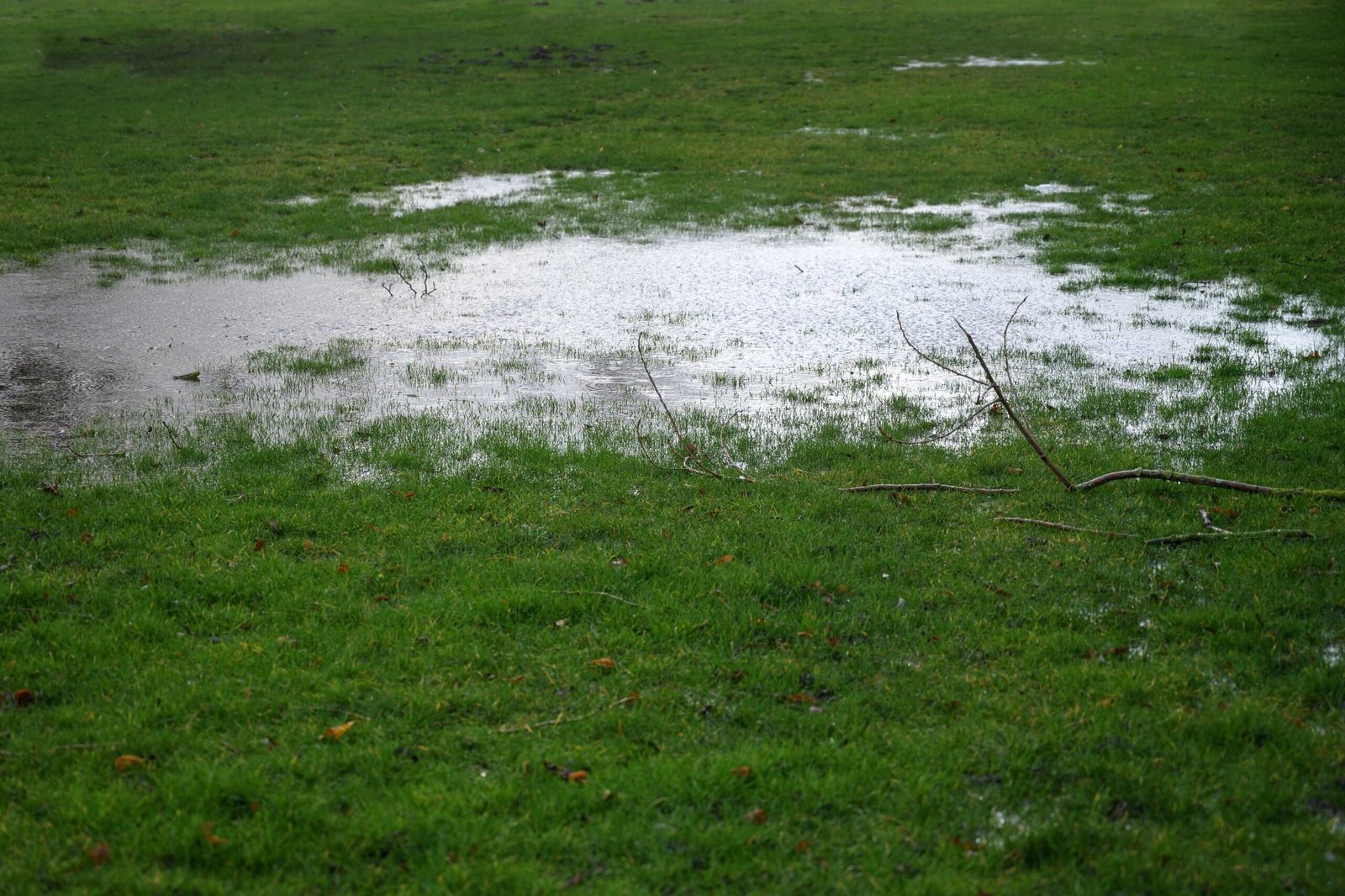
Water is essential to a garden, but roots also need air. When soil stays saturated for too long, the spaces that normally hold oxygen fill with water. Roots slow down, leaves may yellow, plants can wilt even though the ground is wet, and root diseases become more likely.
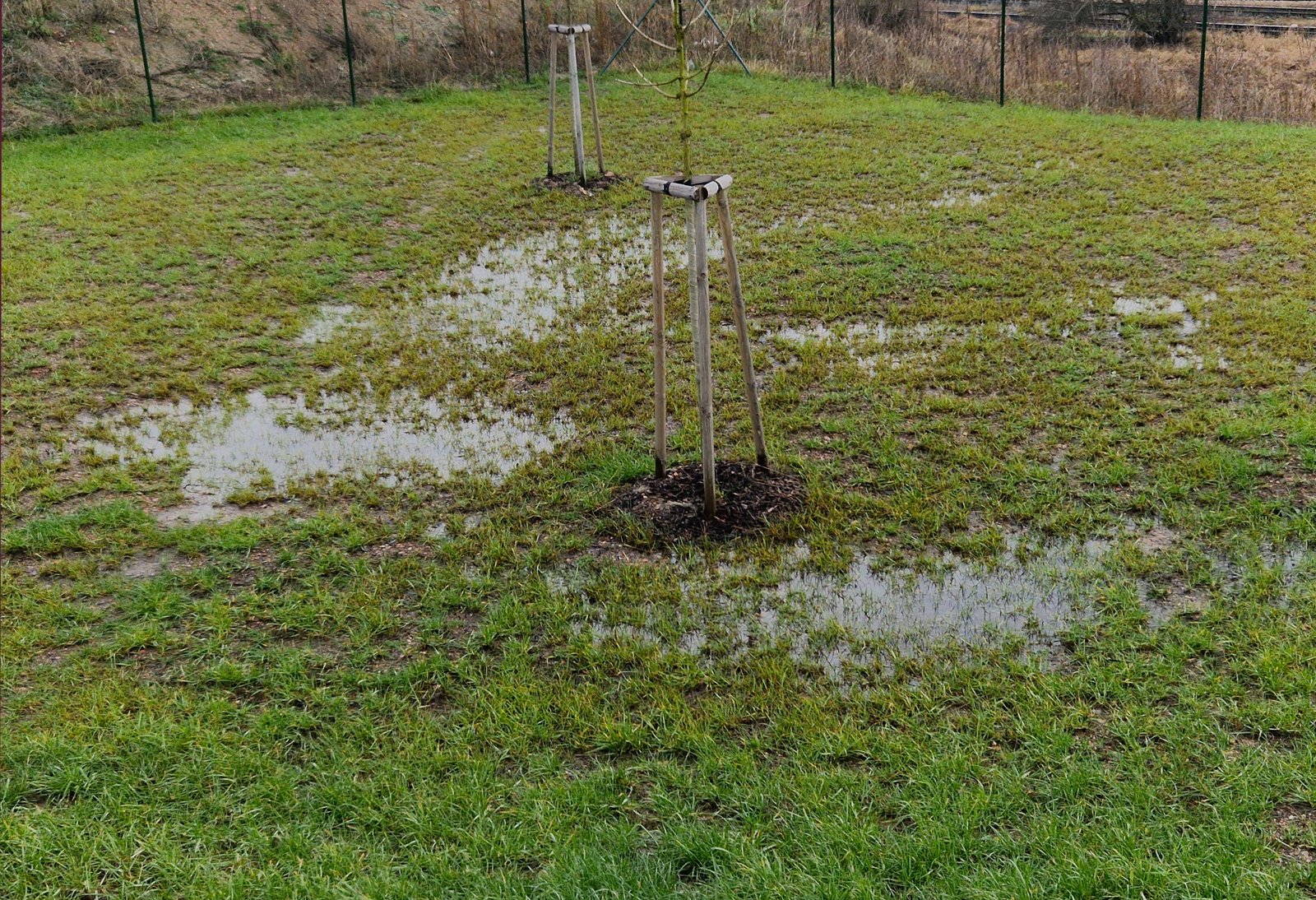
The first mistake many gardeners make is treating every wet area the same. A low spot that receives runoff from a downspout has a different problem from heavy clay that drains slowly across the entire yard. A compacted path needs a different solution from a high water table.
This guide shows you how to diagnose garden drainage problems before spending money on a fix. You will learn simple drainage tests, how to read the shape of your site, when organic matter helps, when raised planting is better, and when a drainage contractor or local professional should be involved.
What Healthy Drainage Looks Like
Healthy garden soil should absorb water, store enough for plants, and release excess water so air can return to the root zone. Good drainage does not mean the soil becomes dry immediately after rain. It means excess water does not remain stagnant for an unusually long time.
Different soils drain at different rates. Sandy soil may lose water quickly. Clay-rich soil can hold water much longer. Organic matter can improve the structure of many soils, but it cannot solve every drainage problem.
The USDA Natural Resources Conservation Service explains soil health in terms of structure, water movement, living roots, and reduced disturbance. Those ideas are useful when improving garden drainage because the goal is to build soil that can accept water without remaining airless.
Signs Your Garden Has a Drainage Problem
- Puddles remain long after rain has stopped.
- Soil smells sour or stagnant.
- Plants wilt while the soil is still wet.
- Lower leaves yellow for no clear reason.
- Roots are brown, soft, or poorly developed.
- Moss or algae appears repeatedly on bare soil.
- Water runs across the surface instead of soaking in.
- One low section is always wetter than the rest of the yard.
One sign alone is not a diagnosis. Shade can encourage moss. Yellow leaves can come from many causes. Use several observations together.
Step 1: Watch the Garden During and After Rain
The easiest drainage test is observation. Go outside during a moderate rain if it is safe. Watch where water arrives, where it flows, and where it stops.
Look for:
- Roof downspouts emptying into beds.
- Water crossing a patio or driveway.
- Low areas where several slopes meet.
- Compacted routes where people or pets walk.
- Soil washed away from an uphill area.
- Neighbors’ runoff entering the property.
Check again one hour, six hours, and one day after the rain. Take photos. A wet-weather photo often explains more than digging random holes later.
Step 2: Do a Simple Infiltration Test
You can compare drainage in different parts of the garden with a basic hole test.
- Dig a hole about 30 centimeters wide and 30 centimeters deep.
- Fill it with water and let it drain once. This pre-wets the surrounding soil.
- Fill it again.
- Measure how the water level changes over time.
- Repeat in another part of the garden for comparison.
This is not a professional soil-percolation test, but it can reveal major differences. If one hole drains much slower than another, the issue may be local.
Do not use a casual garden test to design a septic system or structural drainage. Those jobs require local standards and qualified professionals.
Step 3: Check Whether Compaction Is the Real Problem
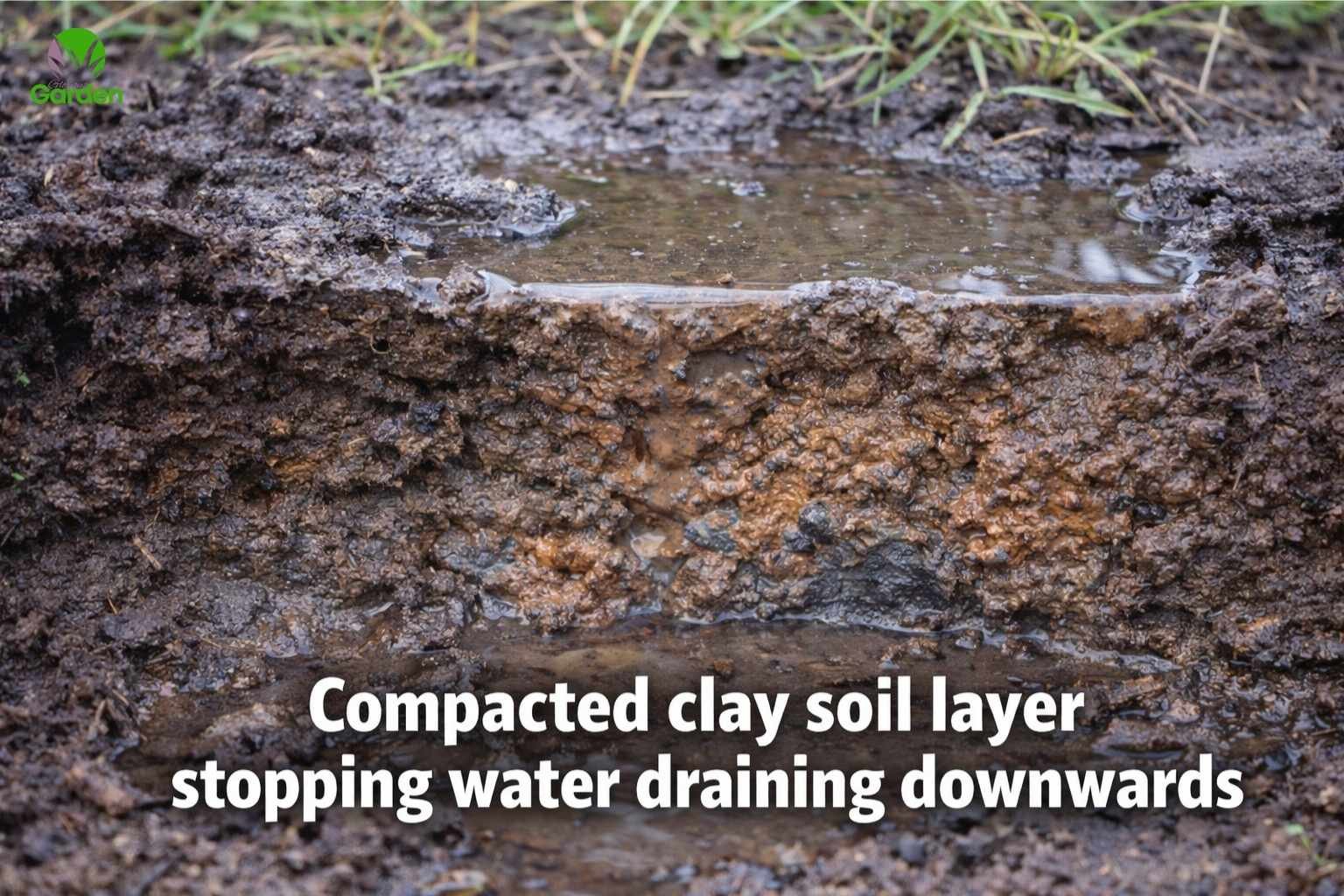
Compacted soil can behave like a sealed surface. Water may puddle even when the soil texture is not naturally heavy.
Common compacted areas include:
- Routes used by wheelbarrows.
- Spaces where construction equipment operated.
- Soil beside driveways and foundations.
- Popular pet paths.
- Old lawns with heavy foot traffic.
Push a garden fork or soil probe into moist soil. If it stops abruptly at the same depth across a large area, a compacted layer may be present.
Step 4: Check the Grade and Water Source
Sometimes the soil is fine but receives too much water. A downspout may discharge thousands of liters into one corner over a wet season. Irrigation may run too long. A neighbor’s hard surface may send runoff toward your fence.
The EPA Soak Up the Rain program provides practical ideas for managing stormwater around homes, including rain gardens, rain barrels, and better use of permeable planted areas.
Before adding soil amendments, reduce unnecessary water input where possible.
Fix 1: Redirect Concentrated Runoff
If a downspout dumps water directly beside plants, extend or redirect it to a suitable area while following local rules. Do not send water onto a neighbor’s property, across a public walkway, or toward a building foundation.
A splash block, downspout extension, rain barrel, or designed rain garden may help, depending on the site.
Always keep drainage changes away from septic systems, buried utilities, unstable slopes, and foundations unless qualified guidance says otherwise.
Fix 2: Improve Surface Grading
Small depressions can collect water. In a planting bed, modest regrading may be enough to create a gentle route for water to move away.
Do not pile soil against house siding or cover weep holes. Building codes often require clearance between soil and structural materials.
If large areas slope toward the house, get professional advice. Moving substantial soil can affect foundations, neighboring property, and drainage rights.
Fix 3: Add Organic Matter to Suitable Soil
Organic matter can improve aggregation in many garden soils. Compost added to the upper soil layer can help heavy soil form more stable crumbs and can help sandy soil hold moisture more evenly.
Do not try to turn clay into a different soil by adding a small amount of sand. Poor sand-to-clay ratios can create a dense, concrete-like mix. Use organic matter and good soil management instead.
Apply compost according to the condition of the bed and incorporate it lightly when establishing a new garden. In established beds, surface applications and mulch can improve soil gradually without frequent deep disturbance.
Fix 4: Stop Working Wet Soil
Digging heavy soil when it is saturated can destroy structure and create hard clods. Wait until it is moist but not sticky.
Try the squeeze test. Take a handful of soil and squeeze it. If water appears or the soil smears into a dense ribbon that stays glossy, it is too wet to work. If it crumbles with gentle pressure, conditions are usually better.
Fix 5: Use Raised Planting Where Appropriate
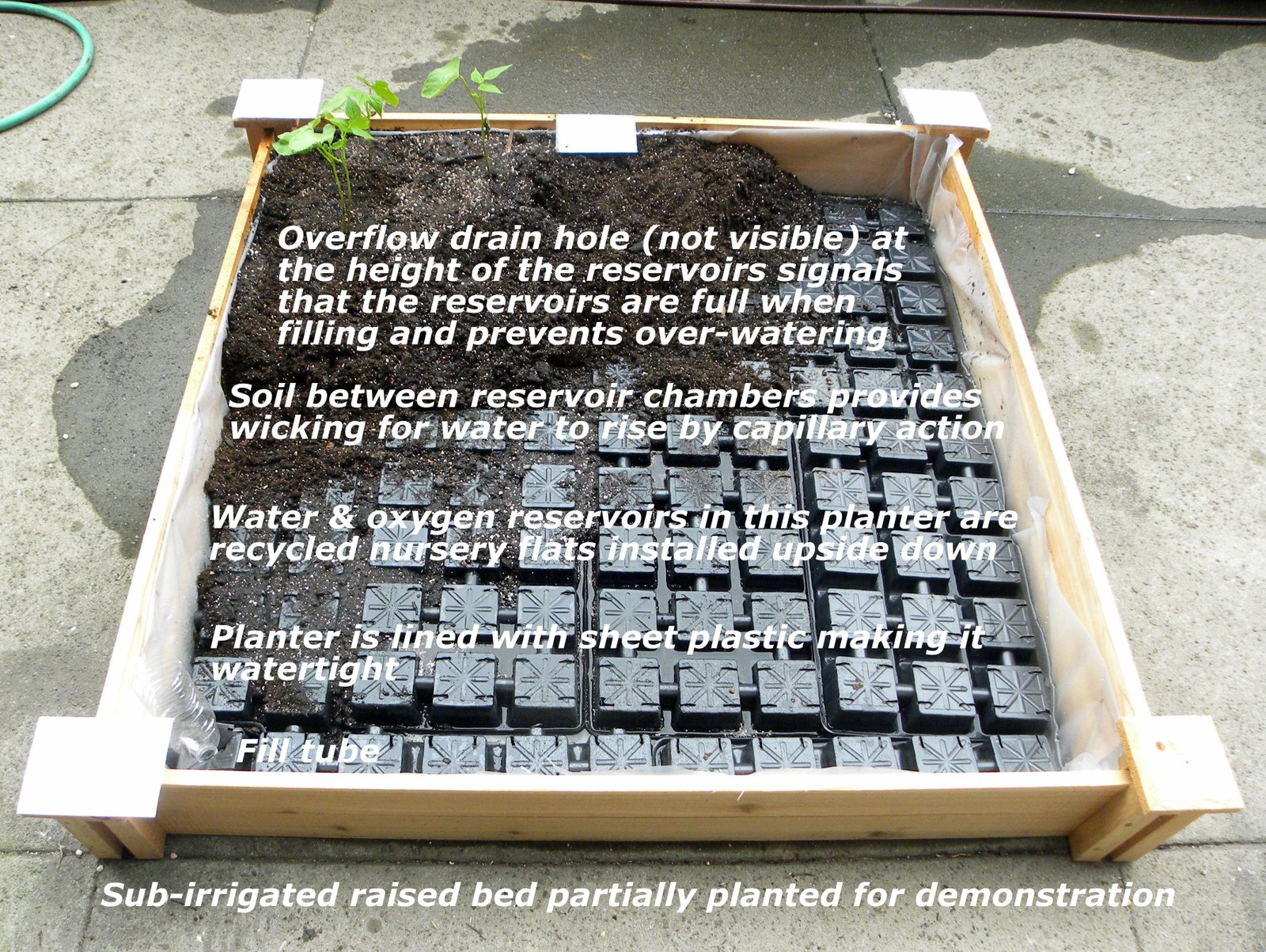
If the site remains wet because of naturally slow soil or a shallow seasonal water table, raising the root zone may be more practical than trying to drain the entire property.
You can use:
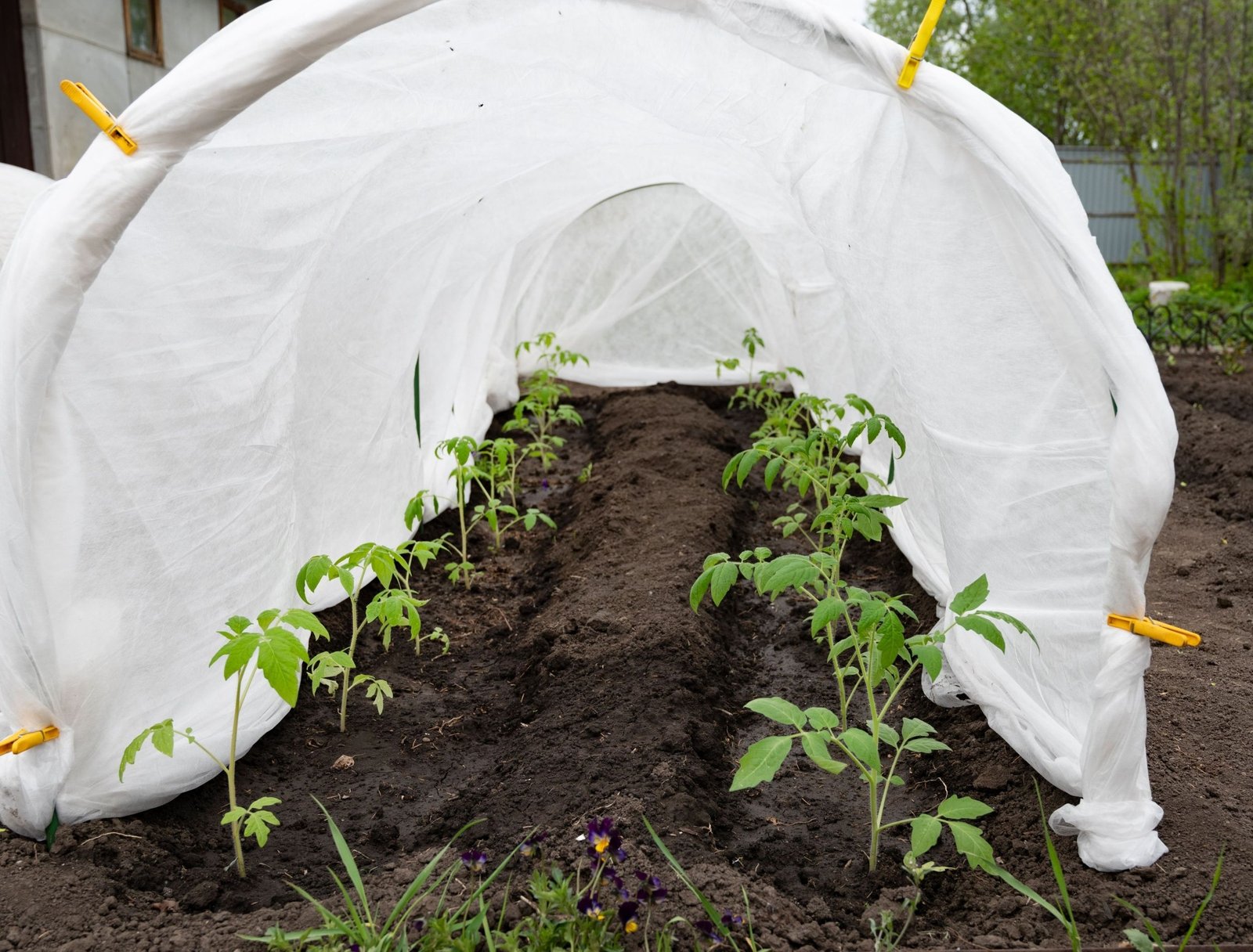
- Raised beds for vegetables.
- Low mounds or berms for shrubs.
- Containers for plants that demand sharp drainage.
Raised planting does not mean creating a tall mound of loose soil around an existing tree trunk. Trees should remain at the correct planting depth.
Fix 6: Choose Plants That Match Wet Conditions
Not every wet area needs to be made dry. If a low corner naturally stays moist and is safely away from structures, use plants adapted to those conditions.
This is often more sustainable than installing a complex drain only to grow drought-loving plants in a wet site.
Check local native-plant resources for species suited to periodically wet soil. Avoid assuming that a “water-loving” plant can grow in permanently stagnant water; tolerance varies.
Fix 7: Consider a Rain Garden for Runoff
A rain garden is a shallow planted depression designed to receive runoff and allow it to soak into the ground. It is not a pond and should not hold standing water for long periods.
Choose location and size carefully. Keep it away from foundations, septic areas, steep unstable slopes, and underground utilities. Test infiltration before building.
If your site receives large storm flows, use professional or local watershed guidance rather than guessing at the size.
When a French Drain May Help
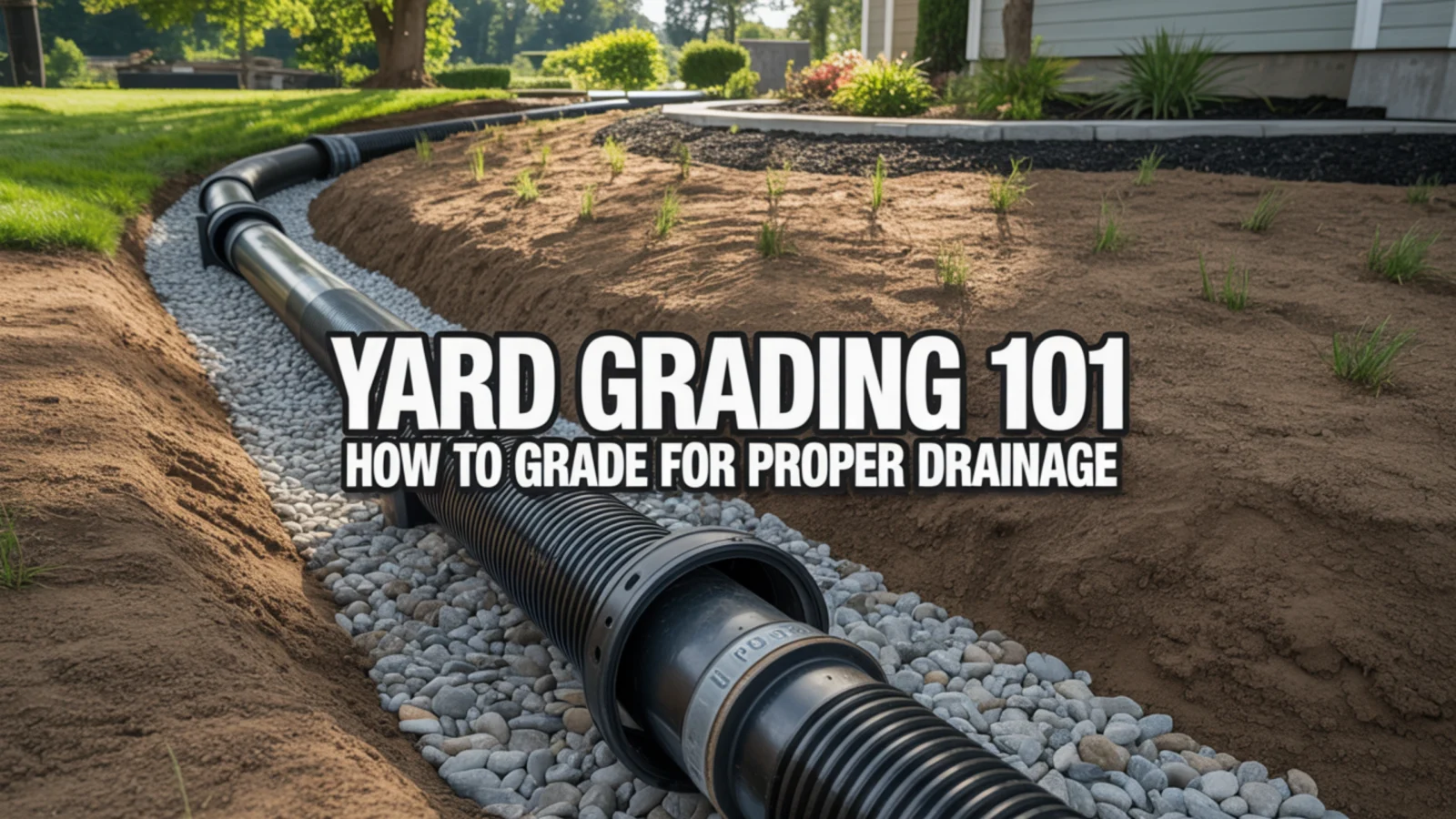
A French drain is a gravel-filled trench with a perforated pipe that intercepts and redirects subsurface water. It can be useful in some situations, but it is not a universal answer.
You need a legal and safe outlet for the water. A drain that has nowhere to discharge is simply an expensive trench.
Before installation, check local rules, utility locations, slope, pipe depth, and where the water will go. Significant drainage work around buildings should be designed by a qualified professional.
Real-World Example: A Soggy Vegetable Bed
A gardener notices that one end of a 3-by-6-meter vegetable plot stays wet for two days after rain. Plants in that end grow slowly and their lower leaves yellow.
The gardener watches during the next storm and discovers that a shed downspout discharges beside the bed. The soil itself is a clay loam, but an infiltration test shows the drier end drains reasonably well.
Instead of rebuilding the entire garden, the gardener takes these steps:
- Redirects the downspout to a safe planted area.
- Adds compost to the vegetable bed during seasonal preparation.
- Keeps permanent walking paths out of the growing rows.
- Forms the wettest rows slightly higher.
- Reduces irrigation after rainfall.
The next storm produces no long-standing puddle. The solution worked because it addressed the source of water, not just the soil surface.
Drainage Problems You Should Not DIY
- Water entering a basement or foundation.
- Large slopes showing erosion or movement.
- Standing water near septic systems.
- Drainage affected by municipal pipes or easements.
- Water flowing from neighboring property in a legal dispute.
- Large trees destabilized by waterlogged soil.
- Any trench near unknown underground utilities.
These situations can involve structural, legal, or safety issues. Use local professionals.
Common Drainage Mistakes
Adding gravel to the bottom of planting holes
A gravel layer does not automatically improve drainage around a plant and can create a sharp change in soil texture that affects water movement. Improve the whole planting area or choose a better site.
Overwatering because the surface looks dry
Clay may be dry at the top and wet below. Check the root zone before irrigating.
Installing a drain without an outlet
Collected water needs somewhere safe and legal to go.
Building soil against the house
Do not raise grades against siding, vents, or damp-proofing details.
Planting moisture-sensitive plants in a known low spot
Plant selection is part of drainage management.
Garden Drainage Checklist
- Observe the site during rain.
- Identify where water enters.
- Check how long puddles remain.
- Compare infiltration in several spots.
- Check for compaction.
- Inspect downspouts and irrigation.
- Correct small grading issues safely.
- Add organic matter where appropriate.
- Use raised planting if the root zone must be higher.
- Choose wet-tolerant plants for naturally moist areas.
- Call a professional for structural or large drainage problems.
Frequently Asked Questions
How can I tell if my soil is too wet for planting?
Dig to the expected root depth. If the soil is sticky, saturated, smells stagnant, or water collects in the hole, delay planting and diagnose the drainage.
Will adding compost fix clay drainage?
Compost can improve structure over time, but it cannot correct a high water table, major runoff, or severe grading problem.
Should I add sand to clay soil?
Usually not as a simple home remedy. Small amounts can create a dense mix. Organic matter and structural improvement are safer general approaches.
Can mulch make drainage worse?
Mulch reduces evaporation, so a bed that is already constantly wet may remain wet longer. Fix the underlying problem and adjust irrigation before applying a thick layer.
How long should a rain garden hold water?
A rain garden is designed to drain between storms, often within a day or two depending on local design standards. Follow local watershed guidance because soil and rainfall vary.
Do raised beds solve all drainage problems?
No. They lift roots above wet soil but do not remove water from the property. Severe runoff or foundation problems still need a broader solution.
Conclusion: Find the Water Source Before Choosing the Fix
A soggy garden is a symptom. The cause may be heavy soil, compaction, poor grading, concentrated roof runoff, excessive irrigation, or a naturally wet site. The right solution depends on which one is present.
Observe the garden during rain, compare drainage in several locations, and check where water enters. Start with small changes: redirect unnecessary runoff, protect soil structure, reduce compaction, and match plants to the site.
If the problem involves buildings, large slopes, utilities, or major drainage systems, use professional help. Good garden drainage is not about forcing water away as fast as possible. It is about giving water a safe path while keeping enough air in the root zone for plants to grow well.