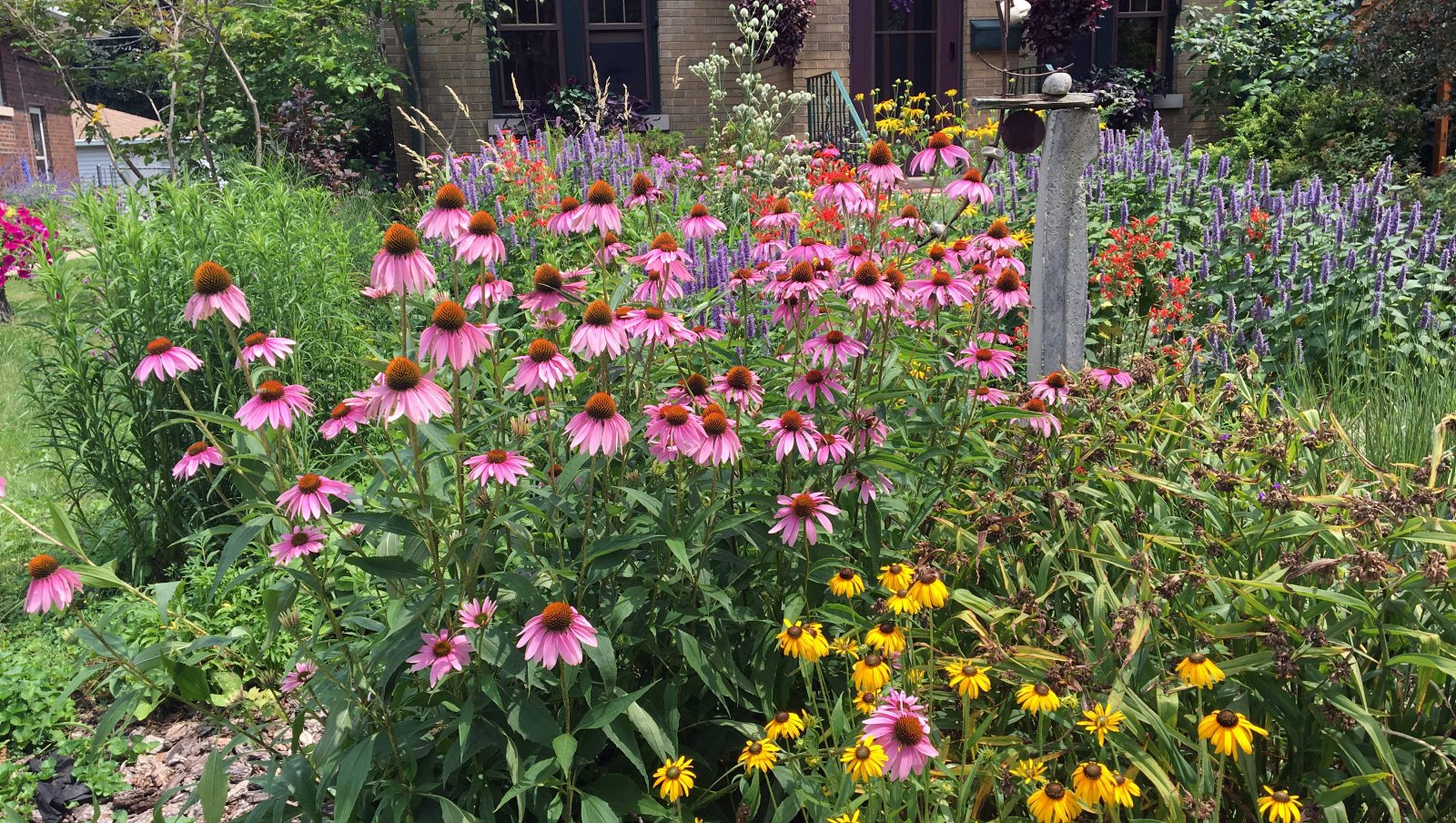
A native plant garden can be attractive, practical, and useful for wildlife, but it works best when plant choice starts with the site rather than a shopping list. A species that is native to your wider region can still fail if it needs moist shade and you place it in a hot, dry bed. The goal is not simply to collect native labels. It is to build a plant community that fits the light, soil, water, and space you actually have.
When plants are well matched to local conditions, a mature native garden can need less routine watering and fewer inputs than a poorly matched ornamental bed. It can also provide pollen, nectar, seeds, shelter, and host plants for insects and other wildlife. That does not mean zero maintenance. New plants need establishment care, weeds still arrive, and every garden benefits from observation.
This guide shows how to plan a native plant garden step by step. It covers site assessment, reliable plant sourcing, layered design, pollinator support, soil preparation, watering, mulch, maintenance, and realistic ways to convert an existing garden without doing everything at once.
What Makes a Plant Native?
A native plant is generally a species that occurred naturally in a region before modern human introduction. The useful scale is regional, not just national. A plant can be native to one part of a large country and poorly suited to another part with different climate and soils.
For garden planning, ask three questions:
- Is this species native to my region?
- Does it naturally occur in conditions similar to my site?
- Is the plant sourced and labeled accurately?
Regional native plant societies, botanical gardens, conservation organizations, government plant databases, and university Extension services can help answer those questions.
The Xerces Society pollinator-friendly plant lists provide regional resources for choosing plants that support pollinators. Use such lists as a starting point, then match each recommendation to your garden conditions.
Why Native Plants Can Make a Garden More Sustainable
Native gardening supports sustainability when it reduces unnecessary inputs and improves habitat. The benefit comes from good plant-site matching, not from the word “native” alone.
Potential benefits include:
- Food and shelter for local insects, birds, and other wildlife.
- Less routine irrigation after establishment for species adapted to local rainfall patterns.
- Reduced need for intensive soil modification when plants suit the existing soil.
- More seasonal diversity through flowers, seeds, stems, and foliage.
- Deeper or varied root systems that can help protect soil structure.
- Lower dependence on annual replanting when perennial species are used.
These benefits are not automatic. A thirsty native wetland plant placed in a dry parking-strip garden may require constant watering. Good design still matters.
Step 1: Study Your Site Before Buying Plants

Spend at least a few days observing the space. If possible, watch it through different seasons before making a major redesign.
Map sunlight
Note which areas receive full sun, morning sun, afternoon sun, filtered light, or deep shade. Buildings and deciduous trees can change the pattern during the year.
Check soil moisture
Observe the garden after rain. Which spots dry quickly? Which stay damp? Do downspouts or paving direct extra water into the bed?
Look at soil texture
Feel the soil. Sandy soil drains quickly. Clay-rich soil holds water longer and can compact. Loam has a more balanced feel. A soil test can provide pH and nutrient information when needed.
Measure the available space
Record bed length and width, distance from paths, and the height limits near windows, doors, utility equipment, and sidewalks.
Identify existing plants
Do not remove everything automatically. Mature trees, healthy shrubs, and useful noninvasive plants may already provide shade, structure, food, or shelter. A native garden can be created in stages.
Step 2: Define the Garden’s Main Job
A clear goal makes plant selection easier. Possible goals include:
- Support native bees and butterflies.
- Create bird habitat.
- Replace a difficult lawn area.
- Reduce summer watering.
- Control erosion on a gentle slope.
- Create a low-growing front-yard planting.
- Add seasonal flowers around existing trees.
You can combine goals, but choose one or two priorities. A garden designed mainly for butterflies may include more flowering host and nectar plants. A dry-slope garden may focus more heavily on deep-rooted drought-tolerant species.
Step 3: Find Reliable Regional Plant Lists
Avoid searching only for “best native plants” because generic lists often cover huge geographic areas.
Better sources include:
- Local native plant societies.
- Regional botanical gardens.
- University Extension programs.
- Municipal water-conservation programs.
- National or regional conservation groups.
- Specialist native plant nurseries.
Cross-check plant names because common names can refer to several species. The scientific name helps ensure you are buying the plant you researched.
Step 4: Build a Layered Planting Plan

Natural plant communities have layers. A home garden does not need to copy the wild exactly, but using several heights creates better structure and can provide more habitat.
| Layer | Examples of Plant Form | Garden Role |
|---|---|---|
| Canopy | Native trees where space allows | Shade, nesting structure, leaf litter |
| Shrub | Medium and small shrubs | Shelter, berries, structure |
| Tall perennial | Flowering perennials and grasses | Nectar, seeds, vertical interest |
| Low perennial | Short flowers, sedges, groundcovers | Soil coverage, small-pollinator resources |
| Seasonal layer | Spring ephemerals or annual natives | Early or temporary bloom periods |
You do not need every layer in a small garden. A balcony planter may use only low flowers and grasses. A suburban backyard may support shrubs, perennials, and a small tree.
Choose Plants for More Than Flowers
Flowers attract attention, but wildlife uses plants in many other ways.
Host plants
Some butterflies and moths lay eggs only on particular plant groups. Their caterpillars need those leaves. A garden designed only around nectar flowers may feed adults without supporting reproduction.
Seeds and fruit
Native grasses, perennials, shrubs, and trees can provide seeds or fruit for birds and other wildlife. Check whether a species needs more than one plant for good fruiting.
Stems and cavities
Some solitary bees nest in hollow or pithy stems. Leaving selected stems standing through winter can provide habitat.
Leaf litter
Fallen leaves shelter insects and return organic matter to soil. Where practical, leave some leaves under shrubs and in garden beds instead of removing every leaf.
Plan for Flowers Across the Season

A pollinator garden is more useful when something blooms in spring, summer, and fall rather than only for three weeks.
Create a simple bloom calendar:
| Season | Plant 1 | Plant 2 | Plant 3 |
|---|---|---|---|
| Early season | Regional native | Regional native | Regional native |
| Midseason | Regional native | Regional native | Regional native |
| Late season | Regional native | Regional native | Regional native |
Fill the table using plants recommended for your location. Aim for overlapping bloom periods so pollinators have fewer gaps.
Planting several individuals of one species together can make flowers easier for pollinators to find and gives the design a cleaner appearance than scattering single plants everywhere.
Step 5: Check Mature Size Before Planting
Native plants sold in small pots can become much larger than expected. Read mature height and width, then give the plant enough room.
Place:
- Tall species where they will not block windows or paths.
- Spreading species where expansion is welcome.
- Short plants along visible edges.
- Thorny or dense shrubs away from narrow walkways.
- Plants with aggressive underground spread only where you can manage them.
“Native” does not mean “well behaved in every garden.” Some native species spread strongly because that is their natural strategy. Match vigor to the site.
Step 6: Prepare Soil With Restraint
One advantage of site-matched native plants is that they may not need heavily amended soil. Rich compost can even make some prairie or dry-site species grow tall and floppy.
Before amending:
- Test soil if pH or fertility is uncertain.
- Correct serious compaction where roots cannot penetrate.
- Remove invasive weeds before planting.
- Add organic matter only where it supports the chosen plant community.
- Avoid routine high-phosphorus fertilizer unless testing shows a need.
The aim is not to create one universal “perfect garden soil.” It is to create conditions that fit the plants.
Step 7: Plant in Repeating Groups

For a natural but intentional design, repeat groups of the same species. A small garden may use groups of three, five, or seven depending on mature size. Larger areas can use broad drifts.
Repeating plants offers several benefits:
- The garden looks organized.
- Pollinators can find flower resources more easily.
- Seedlings of intended plants are easier to recognize.
- Maintenance is simpler because each group has similar needs.
Leave enough room for mature growth. Temporary mulch or a low annual cover can protect open soil while perennials fill in.
Step 8: Water for Establishment, Then Reassess
Even drought-tolerant native plants need water while roots establish. The first growing season is often the most important.
Water deeply enough to wet the root zone, then let the soil approach the moisture level appropriate for that species before watering again. Avoid light daily sprinkling unless newly germinating seeds require it.
As plants establish, gradually reduce supplemental irrigation for species adapted to normal local rainfall. Do not stop based on a calendar date. Heat waves, unusual drought, sandy soil, and recent planting can still require extra water.
Mulch Without Smothering the Garden
Mulch reduces weeds and helps new plants establish, but thick layers are not always needed forever.
Good practices include:
- Keep mulch away from plant crowns and woody stems.
- Use a moderate layer rather than a deep mound.
- Allow leaf litter to remain where it is safe and appropriate.
- Reduce added mulch as groundcover plants fill open soil.
In dry prairie-style plantings, gravel or mineral mulch may suit certain species better than rich organic mulch. Match the surface to the natural preferences of the plants.
Create a Simple Maintenance Routine
A native garden becomes easier when maintenance follows the plant community rather than forcing it to look like clipped turf.
First year
- Water new plants consistently.
- Weed every one or two weeks during active growth.
- Replace failed plants after identifying why they failed.
- Keep labels until you recognize young growth.
Second year
- Reduce irrigation where plants are established.
- Divide or move plants that are crowding neighbors.
- Fill persistent gaps with better-suited species.
- Watch which plants spread strongly.
Mature garden
- Remove invasive weeds before they seed.
- Thin overly aggressive plants.
- Leave some stems and seed heads through winter.
- Cut back at a season that protects wildlife and fits the species.
- Review the bloom calendar and fill seasonal gaps.
Real-World Example: Replacing a Sunny Lawn Corner
A homeowner has a 4-by-5-meter lawn corner that dries every summer. The area receives full sun, has average soil, and is difficult to irrigate evenly.
Instead of removing the entire lawn, the homeowner converts only that corner.
- The lawn is removed or smothered using a method suited to the site.
- A soil test confirms no major correction is needed.
- A local native nursery recommends three dry-site flowering perennials, two grasses, and one small shrub.
- Taller plants go toward the back, grasses repeat through the middle, and low flowers edge the path.
- Plants are spaced for mature size and mulched lightly.
- The bed is watered during establishment.
By the third season, the plants cover most of the soil. Summer irrigation is occasional rather than routine, and the homeowner sees more native bees and seed-eating birds.
Real-World Example: A Small Urban Pollinator Bed
A renter has permission to use a 1-by-3-meter strip beside a patio. The goal is to support pollinators without blocking the walkway.
The gardener chooses low and medium-height native perennials, avoiding tall spreading species. Three plants provide spring bloom, three cover midsummer, and three flower late. The same species are repeated in small groups.
A shallow water dish with stones is cleaned often, and no broad-spectrum insecticide is used. In fall, some stems remain standing instead of being cut to the ground immediately.
The small bed cannot support every wildlife need, but it provides a meaningful patch of food and shelter.
How to Buy Native Plants Responsibly
Plant sourcing matters. Ask nurseries:
- What is the scientific name?
- Is the plant straight species or a cultivar?
- Where was the stock propagated?
- Was the plant treated with systemic insecticides that could affect pollinators?
- What soil and moisture conditions does it need?
- How large will it become?
Never collect plants from wild land without permission. Wild collection can damage natural populations and may be illegal. Buy from reputable growers or participate in authorized plant-rescue or seed programs.
Native Species vs. Native Cultivars
A cultivar is a selected form of a species, often chosen for color, size, disease resistance, or growth habit. Some native cultivars can still provide wildlife value, but changes in flower shape, bloom timing, leaf chemistry, or color may affect ecological relationships.
If wildlife support is the main goal, include plenty of straight native species when available and locally appropriate. If a cultivar solves a real landscape problem, such as fitting under a window, evaluate it rather than treating all cultivars as equal.
Avoid Invasive Plants
A sustainable garden should not spread harmful plants into nearby natural areas. Before planting, check regional invasive-species lists. A plant sold in a nursery can still be invasive in some places.
If an existing invasive plant is difficult to remove, use a targeted control plan. Replace it with a species that performs the same landscape job, such as screening, erosion control, or seasonal flowers.
Reduce Pesticide Risk
A wildlife garden will contain insects. Many are beneficial or harmless. Do not treat every chewed leaf as a pest emergency.
Use an integrated approach:
- Identify the insect.
- Decide whether damage is actually significant.
- Use physical or cultural controls first where practical.
- If treatment is needed, choose the most targeted option labeled for the problem.
- Avoid spraying open flowers or active pollinators.
Caterpillar feeding can be a sign that host plants are doing their ecological job.
Common Native Garden Mistakes
- Buying plants before studying the site. Light and moisture decide success.
- Assuming every regional native suits every yard. Match habitat conditions.
- Planting one of everything. Repeated groups usually look better and work better.
- Ignoring mature size. Small nursery pots can become large plants.
- Over-amending soil. Some natives prefer lean conditions.
- Stopping water too soon. New roots still need establishment care.
- Cleaning the garden completely in fall. Stems and leaves can provide winter habitat.
- Using broad-spectrum pesticides routinely. They can harm the insects you are trying to support.
- Removing all nonnative plants without evaluating them. Convert in stages and keep useful, noninvasive plants when appropriate.
Native Plant Garden Checklist
- Map sun, shade, soil, and moisture.
- Choose one or two main garden goals.
- Use a regional native plant source.
- Confirm scientific plant names.
- Choose flowers for early, middle, and late season.
- Include host plants, seeds, shrubs, or grasses where space allows.
- Space plants for mature size.
- Prepare soil only as needed.
- Water through establishment.
- Reduce routine pesticide use.
- Leave some winter habitat.
- Monitor aggressive spread and invasive weeds.
Frequently Asked Questions
Are native plants really low maintenance?
They can become lower maintenance when matched well to the site, but new plantings still need watering, weeding, and monitoring. Mature gardens also need occasional thinning and invasive-weed control.
Do native plants need fertilizer?
Many established native plants do not need routine fertilizer when growing in suitable soil. Test before adding nutrients, especially in gardens that already receive compost.
Can I mix native and nonnative plants?
Yes. A garden can include noninvasive ornamental or food plants while increasing the proportion of regionally native species. Focus on habitat value and responsible plant choice rather than purity.
Will native plants attract mosquitoes?
Plants themselves do not create mosquito breeding water. Mosquitoes reproduce in standing water. Empty or manage containers and water features so water does not stagnate.
What is the best native plant for pollinators?
There is no single best plant for every region. Choose several locally native species that bloom at different times and include host plants for important local butterflies and moths.
How many native species should a small garden have?
Start with a manageable number. Six to ten well-chosen species repeated in groups can provide more structure and seasonal value than twenty single plants with conflicting needs.
Conclusion: Match Plants to Place and Build Habitat in Layers
Native plant gardening works best when the design begins with the place. Study light, moisture, soil, and space. Then use reliable regional sources to choose plants that naturally fit those conditions.
Build layers when space allows, provide flowers across the growing season, include host plants and seed sources, and leave some stems and leaves for wildlife. Water carefully during establishment, reduce unnecessary fertilizer and pesticide use, and let the planting become denser as it matures.
You do not need to redesign an entire property at once. Converting one bed, lawn corner, balcony planter, or fence line can create useful habitat. Observe what thrives, repeat the successful plants, replace poor matches, and allow the garden to improve year by year.