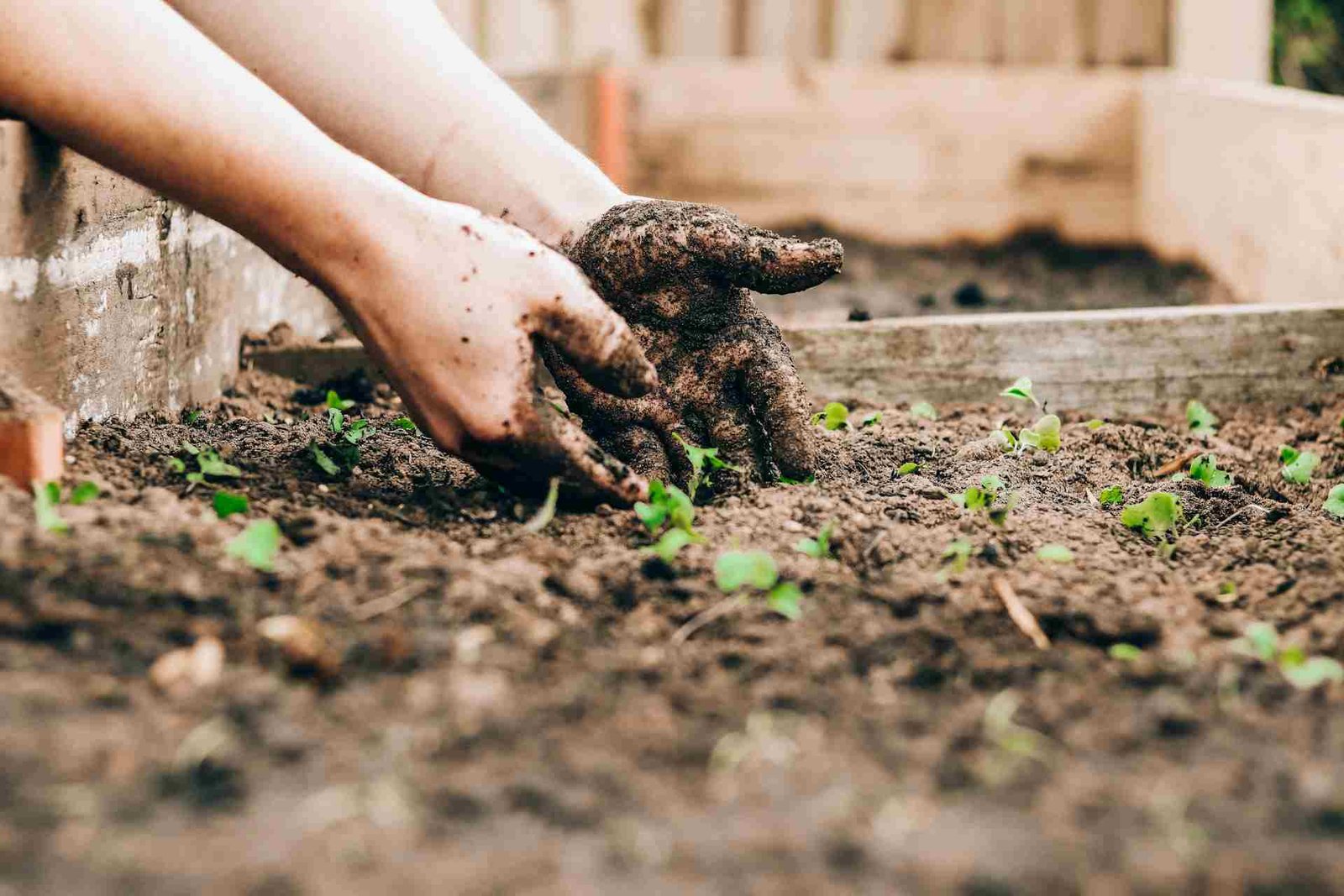

Thinking about planting a garden but not sure where to begin? This honest, beginner-friendly guide covers everything — from choosing the right spot to your very first harvest. No jargon, just real advice.
I killed my first garden.
Not dramatically. Not all at once. It died slowly, quietly, the way most first gardens do — through a combination of too much enthusiasm, not enough knowledge, and the particular brand of optimism that makes you believe six tomato plants, four courgettes, two pumpkins, and a wildflower meadow are all perfectly manageable for a complete beginner with a small raised bed and fifteen minutes a day.
They were not.
By July, the courgettes had eaten everything. The tomatoes were yellow. The pumpkins had escaped the bed entirely and were making a bid for the fence. The wildflowers had not appeared — but the weeds had, with extraordinary commitment. I stood in the garden one warm evening, glass of wine in hand, and looked at the beautiful productive kitchen garden I had imagined, and the chaotic green disaster I had actually created, and I laughed until I nearly cried.
That was seven years ago. This summer, I harvested enough tomatoes to make sauce for an entire year. I grew lettuce so abundant that neighbours started avoiding me. My herbs are so established they practically grow themselves.
The difference between that first failed garden and the gardens I grow now is not talent. It is not a special gift or a green thumb bestowed at birth. It is simply the knowledge — the specific, practical, honest knowledge — that I wish someone had handed me before I planted that first seed.
This is that knowledge. Everything I wish I’d known about planting a garden, before I started.
Table of Contents
- Why planting a garden is worth every mistake
- Before you buy a single seed — the conversations to have with yourself
- Choosing the right spot for your garden
- Understanding your soil — the real foundation
- What to plant first — the honest beginner’s list
- How to actually plant a garden step by step
- The truth about watering
- Feeding your plants without overcomplicating it
- The pests nobody warns you about
- Planting a garden in a small space
- The gardening calendar — when to do what
- The emotional reality of planting a garden
- Your first week action plan
1. Why Planting a Garden Is Worth Every Mistake
Let me tell you about the first tomato I ever grew successfully.
It was a cherry tomato — Sweet 100, if you want to know the variety. I had started the seed indoors in March, watched it germinate with a disproportionate sense of wonder, repotted it twice, hardened it off carefully, planted it in my sunniest raised bed in May, fed it every week, watered it at the base, pinched out the sideshoots, and tied it to its cane with strips of old t-shirt.
In August, I picked it. Warm from the sun. Still on its truss. And I ate it standing in the garden, and it was — I am not exaggerating — the best thing I had ever tasted.
Not because it was objectively superior to every other tomato on earth. But because I had grown it. From a seed smaller than a sesame seed. Into a fruit I held in my hand. The distance between those two things, and the work and patience and small daily acts of care that connected them, made that tomato taste like an achievement.
That is what planting a garden gives you.
A few hours spent outdoors nurturing fruits, flowers and vegetables each week can provide physical exercise, stress reduction, vitamin D and even a better diet — all without a membership fee. But beyond all of that — beyond the wellbeing benefits and the fresh food and the money saved — planting a garden gives you a relationship with the natural world that most modern lives systematically deny us. A daily reminder that things grow. That patience is rewarded. That something as simple as putting a seed in the ground and tending it faithfully can produce something genuinely extraordinary.
Planting a garden is worth every single one of them.
2. Before You Buy a Single Seed — The Conversations to Have With Yourself
Here is where most people go wrong with planting a garden — and it happens before they even step outside.
And then they go outside, look at their small, north-facing strip of shaded ground, and wonder why nothing is working.
Before planting a garden, have these three conversations with yourself:
“What do I actually want from this garden?”
Be honest and specific.
Set your gardening goals before you break out the spade. Do you want to grow fresh vegetables for home? It is a nice activity for all the family.
The most productive gardens are designed around the life of the person growing them. A garden designed around what looks good on Pinterest will never feel as satisfying as one designed around what you actually want to cook, eat, see, and do.
“How much time do I genuinely have?”
Not the time you would have in an ideal world. The time you actually have, in the life you actually live, in the weeks when work is busy and the children need things and the weather is awful and motivation is low.
A small, well-tended garden of two raised beds is infinitely more rewarding than a large, neglected plot of ten beds where guilt has replaced enthusiasm. Beware of putting everything in place immediately. Begin small and keep gradually adding new elements as experience increases.
Start with the time you actually have. Expand when you’ve proven to yourself that you’ll use it.
“What is my actual growing space like?”
Walk outside right now. Not the space as you imagine it could be. The space as it actually is.
Where does the sun hit? For how long? Is the soil compacted or crumbly? Does water drain away or pool? Is it sheltered or exposed? Which direction does it face?
Thinking about what you want to plant before you touch seeds or soil will help your season go smoothly. You should also consider how much growing space you have available, proper crop rotation, and each plant’s prime growing season.
These questions, answered honestly, shape every decision you make in planting a garden. A garden planned around its actual conditions will always outperform one planned around imagined ones.
3. Choosing the Right Spot for Your Garden
If there is one decision in planting a garden that matters more than any other, it is this: where you put it.
Plants are not magic. The right location is not optional — it is the foundation on which everything else rests.
Sunlight — the non-negotiable
Most plants require at least 6 hours of direct sunlight daily, but some thrive in partial shade. Understanding your yard’s sunlight patterns will help you select suitable plants and ensure their healthy growth. Observe different areas throughout the day to determine which spots receive adequate sunlight.
Spend a single day doing this before planting a garden. Check your space at 8am, 12pm, and 4pm. Note which areas are in full sun, which are shaded, which transition between the two. South-facing areas receive the most sun in the northern hemisphere — this is your prime growing real estate.
The most common mistake beginners make when planting a garden: choosing a location that looks like a good garden spot, without checking how much sun it actually receives.
Proximity to water
Your garden needs regular watering. The further it is from a water source — a tap, a water butt, a hose — the less consistently you will water it. This sounds trivial until you are trudging across a wet lawn with a heavy watering can for the fourth time on a summer evening, and you start quietly resenting the garden you were so excited to plant.
Put your garden close to water. Or run a hose to wherever you decide to put it before you plant a single thing.
The view from your kitchen
This is advice you will not find in many gardening guides, and it is among the most practically useful things I can tell you about planting a garden.
Put your garden somewhere you can see it from inside your house.
Not because gardens are decorative objects to be admired from a distance — but because gardens you can see become gardens you tend.
Gardens you cannot see become gardens you forget about between visits.
4. Understanding Your Soil — The Real Foundation
Nobody told me about soil before I started planting a garden. I thought soil was just the stuff you put plants in. The passive backdrop to the real action of growing.
I was entirely wrong.
Soil is not a backdrop. It is the engine. Soil quality is KEY to plant health, so it’s worth getting right. Every problem I had in my first garden — yellowing plants, poor growth, persistent pests — traced back, ultimately, to soil I hadn’t properly understood or prepared.
What healthy garden soil looks like
Pick up a handful of it. Healthy soil is dark — almost chocolate brown — and smells earthy and rich. It crumbles between your fingers rather than clumping into hard lumps or running through them like dry sand. It is alive — if you look closely, you will see small insects, worm casts, and fragments of decomposing organic matter.
Poor soil is pale, compacted, sticky, or sandy. It doesn’t crumble — it either forms hard lumps when dry or sticks to everything when wet. It smells of nothing, or of something slightly sour.
How to improve any soil before planting a garden
The answer is always the same, regardless of whether your soil is too sandy, too clay-heavy, too compacted, or too depleted: add compost.
Fill new raised beds with about 60-70% quality soil, 20% well-aged compost, and about 5-10% aeration additions — such as pumice or lava rock.
Dig in a generous layer of compost — at least 5–10cm — before planting a garden. Not just once. Every single season. Every year of compost additions makes your soil progressively better: more fertile, better draining, more biologically active, more productive.
The pH question
Most vegetables prefer slightly acidic soil — a pH between 6.0 and 7.0. A simple test kit from any garden centre costs a few pounds and tells you instantly where your soil stands. Too acidic? Add garden lime. Too alkaline? Add sulfur or acidic compost. One soil test before planting a garden saves you months of wondering why your plants aren’t performing.
5. What to Plant First — The Honest Beginner’s List
I want to save you from the mistake I made. The mistake of looking at a seed catalogue and ordering everything that looks beautiful, without asking the question that should come first: is this plant forgiving enough for a beginner?
Some plants are extraordinarily unforgiving.
Before you graduate to the difficult ones, start with these.
Salad leaves and lettuce — start here first
If you have never grown anything before and you want immediate, convincing proof that planting a garden is worthwhile — grow salad leaves. They germinate quickly, grow fast, and can be harvested — leaf by leaf — within four to six weeks of sowing. The cut-and-come-again method means one small row of seeds provides salad for months.
They tolerate partial shade, require minimal care, and produce something genuinely useful for your kitchen almost immediately. Plant them first. Eat them. Let the experience encourage everything else.
Radishes — the gateway vegetable
Nasturtiums are easy to sprout and can reseed easily. But for vegetables, nothing is faster or more rewarding than radishes. Ready in as little as three weeks from sowing. Almost impossible to get wrong. Sow a short row every two weeks throughout the season for a continuous, manageable harvest.
They are the vegetable that tells beginners: yes, you can do this.
Courgettes — one plant only, please
I cannot stress this enough: plant one courgette. One. A single courgette plant, in good rich soil in full sun, will produce more courgettes than a family of four can eat. It will produce courgettes you forget to pick that turn into marrows overnight. It will produce courgettes of comical size that hide under leaves, waiting to ambush you.
Plant two courgette plants and you will be giving bags of them to strangers. Plant three and your neighbours will start screening your calls.
One plant. It is enough. It is more than enough.
Cherry tomatoes — the great reward
Cherry tomatoes are the plant that makes planting a garden feel completely worth it. They are more forgiving than large tomatoes, faster to fruit, and extraordinarily productive. And a home-grown cherry tomato eaten warm from the vine on a summer afternoon is — I will say it again, because it deserves saying — one of the finest things you will ever taste.
Choose a compact variety for containers (Tumbling Tom is excellent). Choose Sweet 100 or Gardener’s Delight for raised beds. Give them your sunniest spot, your most consistent watering, and a weekly high-potassium feed once they flower. They will repay you generously.
Herbs — the daily harvest
No list of what to plant when planting a garden for the first time is complete without herbs. Grow basil, chives, and flat-leaf parsley at minimum. These three alone transform your cooking every single day — in a way that a once-a-week courgette harvest simply cannot.
Herbs are also the most financially efficient plants you can grow. A pot of chives on the windowsill saves you the price of those wilted supermarket herb packets every week for years. Grow herbs close to your kitchen door, where you’ll actually use them, and they will change the way you cook permanently.
6. How to Actually Plant a Garden Step by Step
Enough philosophy. Here is exactly how to go about planting a garden, from the very beginning.
Step 1: Prepare your bed
Remove all existing weeds — roots and all. There is no shortcut here. A weed left in the ground is a weed that will return. Dig the soil to at least 20–25cm depth, breaking up any compacted layers. Work in a generous quantity of compost or well-rotted manure. Rake the surface level. Water lightly and leave for a few days before planting.
Step 2: Check your timing
The single most important timing concept in planting a garden is your last frost date — the average date of the last freezing temperature in spring. Tender crops (tomatoes, peppers, courgettes, cucumbers, basil) must not go outside until after this date — frost kills them overnight.
Hardy crops (lettuce, peas, radishes, spinach, kale) can be planted several weeks before the last frost. They tolerate cold and are often improved by it.
Search “last frost date [your area]” to find yours. Mark it on your calendar. Build everything else around it.
Step 3: Sow seeds correctly
Read your seed packet before doing anything else. Sowing depth, spacing, timing — all are specified and all matter. Sow at the correct depth (usually 2–3 times the diameter of the seed). Label everything the moment you sow it — by the time seedlings appear, you will have forgotten what is what. Water gently with a rose head — a jet of water washes seeds away and collapses delicate seedlings.
Step 4: Or plant young plants from the garden centre
If you’ve missed the sowing window, or you simply want to shortcut to a more established starting point, young plants from a good garden centre are a perfectly legitimate approach to planting a garden. Not everything needs to be grown from seed, and no one is marking you down for buying a tomato plant rather than starting from a seed.
Choose stocky, healthy-looking plants — short and bushy rather than tall and pale. Avoid anything wilting, yellowing, or rootbound (roots circling visibly out of the drainage holes). Plant on a cloudy day or in the evening to reduce transplant stress.
Step 5: Water in well after planting
Every plant — whether seed or transplant — needs a thorough watering in after being planted. This settles the soil around the roots, removes air pockets, and gives the plant immediate access to moisture as it begins to establish. Use a watering can with a gentle rose head, and water slowly enough for it to soak in rather than running off the surface.
Step 6: Label, record, observe
Label what you’ve planted. Write the date. Note the variety. These details feel trivial in the excitement of planting a garden — they become invaluable three months later when you’re trying to remember why the left-hand bed is producing so much more than the right, or which tomato variety was the one you loved so much you want to grow it again next year.
Start a garden journal. Even a notes page on your phone. The information you record this season will make you a significantly better gardener next season.
7. The Truth About Watering
Everyone who is new to planting a garden overestimates how much water their plants need, and underestimates how much damage overwatering does.
Overwatering is the single most common cause of plant death among beginners. More plants are killed by kindness — by anxious, well-meaning daily watering regardless of what the soil actually needs — than by any pest, disease, or drought.
Here is the only watering rule you actually need: check the soil before you water it.
Push your finger 2–3cm into the soil beside your plant. If it feels damp at that depth — wait. If it feels dry — water thoroughly. Thoroughly means slowly and deeply, until water drains from the base of the container or soaks visibly into the ground. Then leave it alone until the finger test says to water again.
One of the most valuable beginner gardening tips is to develop a routine of watering. Over watering is a common mistake, so research the specific needs of your plants and adjust your care accordingly.
Water in the morning when you can — this gives foliage time to dry during the day, reducing the risk of fungal disease. Always water at the base of plants, not over the leaves. And in hot weather, a thick mulch of compost or straw around the base of plants reduces moisture loss dramatically — meaning you water less often while keeping roots more consistently hydrated.
8. Feeding Your Plants Without Overcomplicating It
Planting a garden in good compost-enriched soil means most plants will have enough to eat for their first few weeks without any additional feeding. After that, different plants have different needs — but you can simplify all of it into a few basic rules.
Leafy crops — lettuce, spinach, kale, herbs: These are hungry for nitrogen — the nutrient that drives leafy green growth. A liquid seaweed feed every two to three weeks keeps them growing vigorously.
Fruiting crops — tomatoes, peppers, courgettes, cucumbers: These need a switch in their feed once flowers appear. Stop high-nitrogen feeds (which drive leaf growth at the expense of fruit) and switch to a high-potassium feed — often labelled “tomato feed.” Feed weekly once flowering begins.
Root vegetables — carrots, beetroot, radishes: These need relatively little feeding. Over-feeding with nitrogen produces lush tops and poor roots. A well-composted soil is usually sufficient.
Herbs: Mediterranean herbs (rosemary, thyme, oregano) actively prefer lean conditions — don’t over-feed them. Leafy herbs (basil, parsley, chives) benefit from a gentle liquid feed every two to three weeks.
The honest truth about feeding when planting a garden: get the soil right with generous compost, and most plants will largely feed themselves. Supplements help, but they cannot compensate for poor soil.
9. The Pests Nobody Warns You About
Every gardener who has ever planted a garden has a pest story. Here is mine.
I grew the most beautiful, abundant lettuce patch I had ever seen. Rows of perfect, lush green leaves, ready to harvest. I went to bed. In the morning, there was nothing. Not wilted, not damaged — gone. Every single plant, eaten to the ground overnight by slugs so efficient they left barely a trace.
I stood looking at the bare soil and felt something between grief and admiration.
Here is what you need to know about pests when planting a garden:
Slugs and snails are your most persistent enemy, particularly in spring and autumn when conditions are damp. They operate at night. The most effective organic controls: copper tape around raised bed edges, beer traps (containers sunk level with the soil filled with cheap beer), and going out after dark with a torch and removing them manually. Parasitic nematodes (watered into the soil) are the most effective single treatment.
Aphids appear on new growth and multiply with alarming speed. Blast them off with a jet of water. Introduce or attract ladybirds (which eat them voraciously). Plant marigolds nearby — they confuse and deter aphids while attracting their predators.
Cabbage white butterflies lay eggs on brassicas from spring through summer. The eggs hatch into caterpillars that can strip a plant bare in days. The solution is simple and effective: fine mesh netting over all brassica crops from planting time. Nothing else comes close.
Check for pests regularly, and keep them away using methods such as neem oil. Neem oil spray, applied to the undersides of leaves every two weeks, controls a wide range of pests without harming beneficial insects — as long as you spray in the evening when pollinators aren’t active.
10. Planting a Garden in a Small Space
One of the most persistent myths about planting a garden is that you need significant outdoor space to grow anything meaningful.
You do not.
Some of the most productive and beautiful gardens I have encountered have been on balconies. On windowsills. In a single raised bed beside a back door. In a collection of containers on a paved courtyard. Space is not the limiting factor — sunlight is. Give a plant six hours of sun, reasonable soil, consistent water, and it will produce for you. Whether that happens in a quarter-acre garden or a collection of pots on a fifth-floor balcony is largely irrelevant to the plant.
When planting a garden in a small space, these principles matter most:
Go vertical. Every vertical surface — a wall, a fence, a railing — is growing space waiting to be used. Climbing beans, cucumbers, tomatoes, and countless herbs grow happily upward on a simple trellis. Wall-mounted planters expand your growing area without touching your floor space.
Choose compact varieties. Seed catalogues and plant labels increasingly specify varieties bred for container and small-space growing. Tumbling Tom tomatoes for hanging baskets. Patio courgettes. Bush beans that don’t need support. Dwarf French beans. These are not compromises — they are full-performing plants designed for exactly your situation.
Prioritise high-value crops. In a small space, every planting decision matters more. Grow the things that cost most at the supermarket and take up least space: herbs, salad leaves, spring onions, cherry tomatoes, chillies. These give you maximum return on your limited square footage.
Containers and raised beds will be some of the easiest ways to grow food, but they have a big upfront cost from the materials to the soil that you will need. If you have some available soil space for planting in ground, this is by far the cheapest option.
11. The Gardening Calendar — When to Do What
The question I am asked most often by people new to planting a garden is some version of: “But when do I actually do everything?”
Here is the simplified version:
Late Winter (January–February)
The garden is quiet but your mind shouldn’t be. This is planning time. Order seeds. Read about varieties. Draw your plan on paper. Order or build any raised beds or structures you need. Start chillies and peppers on a heated propagator if you have one — they need the longest growing season of any vegetable.
Early Spring (March–April)
Start tomatoes indoors. Start courgettes, cucumbers, and squash indoors (3–4 weeks before last frost). Sow salad leaves and radishes directly outdoors — they tolerate cold. Plant onion sets and early peas directly outdoors. Prepare beds with compost.
Late Spring (May)
The most exciting month in the gardening calendar. After your last frost date: plant tomatoes, courgettes, cucumbers, and basil outside. Direct sow beans, beetroot, and carrots. Plant herb plants from the garden centre. The garden comes alive.
Summer (June–August)
Harvest, water, feed, and observe. This is the season of daily attention — and daily reward. Harvest regularly to keep plants producing. Water consistently. Feed tomatoes weekly. Watch for pests. Enjoy every single moment of what you’ve grown.
Autumn (September–November)
Harvest everything before the first frost. Clear spent plants. Add compost to beds. Plant garlic (October is perfect). Sow overwintering salad leaves under cover. Begin thinking about next year.
Winter (December–February)
Rest. Reflect. Note what worked and what didn’t. Order seeds for next year. Dream about the garden. Then start again.
12. The Emotional Reality of Planting a Garden
Nobody talks about this part. And it matters.
Planting a garden is an act of hope. You put a seed in the ground — something tiny and dry and apparently inert — and you believe, on the basis of no direct evidence whatsoever, that it will grow. That in a few weeks or months, something beautiful and edible and alive will emerge from that small act of faith.
Sometimes it doesn’t. Sometimes the frost comes early, or the slugs are merciless, or the summer is too wet, or the seeds simply don’t germinate. And when that happens — and it does happen, to every gardener, regardless of experience — there is a particular kind of quiet disappointment that people who haven’t gardened don’t quite understand.
But here is what I have learned over seven years of planting a garden: the failures are part of it. They are not evidence that you’re doing it wrong, or that gardening isn’t for you, or that you should give up and buy your vegetables from the supermarket. They are evidence that you’re gardening. That you’re in a relationship with something living and unpredictable and seasonal, and that relationship — like any relationship worth having — is sometimes difficult.
This tip may seem obvious but it’s so easy to fall into the trap of social media and self-doubt. Go with what you can afford. Start small.
The gardeners who get good are the ones who stay in the relationship. Who plant again after the failure. Who try a different variety, or a different position, or a different approach — not because they’re certain it will work, but because they’re committed to finding out.
Be that gardener. Plant again. It is almost always worth it.
13. Your First Week Action Plan
You don’t need to do everything at once. You just need to start. Here is what to do this week:
Day 1 — Observe Go outside and spend 20 minutes simply looking at your space. Take three photographs — one in the morning, one at midday, one in the afternoon — to see how sunlight moves through the space.
Day 2 — Decide Choose one thing you want to grow more than anything else. One plant that excites you. That will be your anchor crop — the thing you plan your first garden around.
Day 3 — Plan Write a simple list. What will you grow? Where will it go? What do you need to buy or build? Keep it small. A single raised bed or four to six containers is a perfect first garden.
Day 4 — Prepare Clear your chosen space. Remove weeds. Test your soil. Buy or make compost. Get the ground ready before you buy a single plant.
Day 5 — Plant Buy your seeds or young plants. Sow or plant them. Label them. Water them in. Stand back and look at what you’ve begun.
Day 6 — Observe again Check your plants in the morning. Note how they look. How the soil feels. Whether anything has visited overnight. This is the beginning of the daily observation habit that makes all the difference.
Day 7 — Rest and be proud You started a garden. Whatever it produces, however it grows, however many mistakes you make along the way — you did something genuinely wonderful.
Now do it again next week.
A Final Word
The garden that changed my life was not the first one I planted. It was the second. The third. The accumulation of seven seasons of getting things wrong and getting things right and learning, slowly and joyfully, the particular language of growing things.
Your first garden will not be perfect. It will surprise you — sometimes beautifully, sometimes frustratingly. It will teach you things no guide can fully convey. And it will, if you let it, become one of the most important and sustaining practices of your life.
All of that starts with one seed, pushed into the soil with one finger, in one small hopeful act of beginning.
Start this week.
Happy growing, Sajjad
Read these next:
- How to start a vegetable garden from scratch
- 10 easiest vegetables to grow at home
- Kitchen garden: the complete beginner’s guide
- How to start composting at home